Monday, December 14, 2009

The Christian reason for the "Secular Christmas"

This article was recently posted on another blog, and I have enjoyed reading and thinking about it. I find myself mostly in agreement with its conclusions.

Many in the Church are deeply critical of the craziness which surrounds our cultural practices at this season, yet it is often the case that Christians are in there with everyone else pushing the "Christmas Machine" into overdrive.

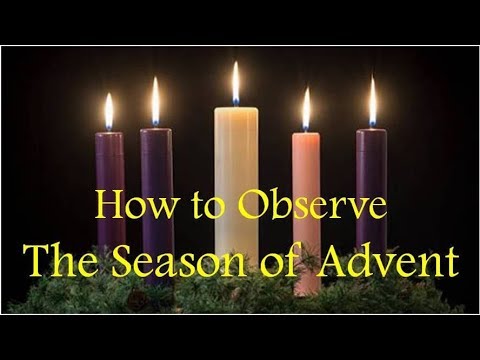
One thing I try to do -- difficult as it can be in our age of opulence -- is really observe Advent as a season of few parties and "exterior" events. While I don't get militant about it, it seems to me that this season, for liturgical and catholically-minded Christians, needs to be a fasting season in all of what this means: a fast from business, compulsion, over-filled stomachs and over-filled schedules. In order to be truly expectant -- one of the key parts of Advent's character and thus pointing to the whole of the Christian life -- a soul requires the capacity to hear. This above-linked article speaks to our own share in the creation of this annual spiritual deafness we call the "Holidays."

May our week contain many moments when the conflict between secular consumerism and the Gospel are highlighted; may we reach for the Gospel and not the remote when those conflicts arise!

Friday, December 11, 2009

Thoughts on an Advent Antiphon

Drop down you heavens from above, and let the skies pour down righteousness; let the earth open, and let it bring forth salvation.

During Advent, those who use The Prayer Book Office (an expansion of the 1979 Book of Common Prayer's Rite II daily prayer services) by the late Howard Galley will be familiar with this antiphon said before and after the Song of Mary (or Magnificat, from the Gospel according to Luke). Like all antiphons, it sharpens the sense of a biblical text according to the time of year or the particular feast day/commemoration being observed.

This particular antiphon, drawn from the Prophets, is cast in the form of a plea to God -- a plea for righteousness and salvation. The image is that these things will come to us both from heaven and earth. This is, in fact, accomplished in the Song of Mary which the antiphon frames. The righteousness of God is poured into the world through the "overshadowing of the Holy Spirit" at the Annunciation, and salvation wells up into humanity through the Incarnation of God in Christ, made possible equally by the gift of human flesh through the Virgin Mary. In the Nativity, this plea to God is brought to fruition, the "fruit" of the Blessed Virgin's womb St. Elizabeth exalts at the time of the Visitation (when the Magnificat was first uttered by St. Mary).

As with so much of the Catholic and liturgical path in Christianity, we have here a rich and complex meditation on great mysteries of the Faith put forth with splendid economy and using the simplest imagery. It is yet another reason to rejoice in the gift of our Anglican heritage, to practice that heritage that we might be formed into better disciples of Christ through it, and to call on the Church's leadership to make that heritage better-known in its common life.

Tuesday, December 8, 2009

The Conception of the Blessed Virgin Mary, immaculate or otherwise

Today is an old commemoration on the western Christian Church Calendar – though not one found in the official Episcopal Calendar (even after the mass additions from the last General Convention!): “The Conception of the Blessed Virgin Mary.” A take on its history may be found here. Suffice it to say that this feast – along with most others in the Marian Cycle – show a strong symmetry with the events of Christ’s life, linking Mary and her son in many ways for theological and poetic reflection.

For the Roman Catholic Church, this is a major day celebrating a key Dogma or teaching for that communion. For the majority of Anglicans, it is at best a minor commemoration. Like most of the Marian Feasts, it was stripped out of the Church's calendar in the reformation owing to no discussion of this event being found in the New Testament. However, aspects of it continued to be found in our tradition (notably a commemoration of Sts. Anne and Joachim – the traditional names for the parents of the Blessed Virgin Mary). The Anglican Church tradition continued to have different opinions about the exact nature of Mary’s condition vis-à-vis Original Sin – with some commentators being quite clear that Mary was in some way “cleansed” of that taint in order to be fit to bear the Son of God into the world, while others did all in their power to say that Mary was in no way different from any other human being in all but her personal calling and faith. The result is that the Anglican tradition has no official teaching on the question of the nature of her conception, but continues the ancient Church’s practice of according her the highest honor of the saints as the Theotokos or “God-bearer.” For those Anglicans who continue to observe this Feast, it is often a time to consider a great mystery beyond complete definition but worthy of reverence and thanksgiving.

On this day, we are called to contemplate both St. Mary’s mission as a human being and the fruits of that mission which were already potentially present at the outset of her life. She shares with us the essential qualities of humanity, and would give those qualities to the Son of God whom she would bear. But, she also was in some way set apart for a special service to God – one that astounds when it is contemplated. So, too, is our calling: while we cannot compare our own vocation to hers in some ways, we must never forget that each one of us has been given gifts and capacities for a particular mission as part of God’s Holy People – and we will be called to account for how we have used these gifts in the service of a God who desires all to be brought to its fulfillment in Him.

Almighty and everlasting God, who didst stoop to raise our fallen race by the childbearing of blessed Mary; Grant that we who have seen thy glory manifested in our humanity, and thy love perfected in our weakness, may daily be renewed in thine image, and conformed to the likeness of thy Son, who liveth and reigneth with thee and the Holy Ghost, ever one God, world without end. Amen.

Monday, December 7, 2009

St. Ambrose

O God, who gave your servant Ambrose grace eloquently to proclaim your righteousness in the great congregation, and fearlessly to bear reproach for the honor of your Name: Mercifully grant to all bishops and pastors such excellence in preaching and faithfulness in ministering your Word, that your people may be partakers with them of the glory that shall be revealed; through Jesus Christ our Lord, who lives and reigns with you and the Holy Spirit, one God, now and for ever. Amen.

Today we commemorate the life and witness (and more especially, the ordination to the Holy Episcopate) of St. Ambrose of Milan, one of the greatest of leaders and theologians in the ancient and undivided Church.

Ambrose was an extraordinary person. Born into a powerful Christian family in the early days of the Church’s legal legitimacy, he was not baptized until adulthood. He was allowed to discern whether or not he wished to follow Christ himself. He made his way through the ranks of the Imperial Service, likely being rewarded for his personal integrity, as revealed in the next chapter of his life.

After serving as the governor of a province (quite a responsibility, showing superior administrative skills), he found himself in the middle of a conflict over who should be the next bishop of the important city of Milan. The two “parties” of the day (Arian and orthodox) each had candidates, but neither had the capacity to force their person onto the Episcopal throne. In the process of mediating the conflict of a Church in which he was not yet a formal member, he was himself selected by the warring parties as the best candidate! He was baptized very quickly, and consecrated bishop immediately in a rare example of ecclesiastical economy (making a non-precedent setting exception to canonical rules when it is judged truly right and proper by the Church).

During his years as a bishop, Ambrose fulfilled this ministry in an amazingly complete way. He was superb teacher: thoroughly yet creatively orthodox, he wrote a large body of works for new Christians, instructing them in the essentials of the faith while preserving a deep respect for the ultimate mystery of God (these catechetical works are still very useful today). He was a gifted liturgist and hymn-writer, composing hymns to be used through the course of the day (they are part of the Church’s “Little Hours” of prayer at 6 AM, 9 AM, Noon, and 3 PM), and introducing a variety of singing and worship practices that greatly enriched the Western liturgical tradition. He was an inspiring preacher and friend – it was his witness to the faith that probably finally made Augustine realize that one could be a faithful Christian while retaining intellectual depth and curiosity. He served as a skilled pastor, showing by example the quality of a peaceful life of prayer, balance, and concern for the well-being of the poor. Finally, because of his lifetime of working in the higher circles of the State, he could “speak truth to power,” as we would say today: when the Emperor Theodosius had many of the people in the rebellious city of Thessalonica slaughtered, Ambrose forced him to do penance for this ghastly act of violence. For the first time, the Church had been able to demand the Empire to live up to the Gospel’s teachings in such matters.

We who live at the other end of the era of Christendom must find all of this in some ways remote and peculiar: but the requirement that bishops be about the fullness of Apostolic witness and teaching – rather than merely ride their own hobby-horses or retire into a life of abstruse or venial comfort – remains the same today as it was then.

Holy Ambrose, pray for us and for our portion of the Church in this day!

The Unassimilated Church

Modern man has an obsession for simplicity and authenticity, and can easily be tempted to sacrifice forms, structures, and symbols which he has not taken the time to assimilate. At a time when disputation is sky-rocketing, he may risk throwing out real values without proposing anything to replace them.

- From “Serving God First: Insights on the Rule of St. Benedict” by Dom Sighard Kleiner, translated from the French by James Scharinger (Cistercian Studies Series, 83), 1985

Once in a while I come upon something that neatly and succinctly expresses an idea or sense of things I previously been unable to put into words. Dom Sighard Kleiner’s words in the above passage are an example.

In our part of the Church, we continue to go through a time of intense and often conflicted change. We see it in liturgy, theology, ecclesiology, ethics, demographics, and myriad other areas. Change is a constant in life and in the Church, of course; but ours is an era which wears change on its sleeve much more proudly than most others, making it (in some quarters) the highest good rather than a necessary but ultimately neutral fact. This has resulted in at least these two interesting consequences.

First, “disputation”(as Kleiner calls it) is now a normal way of “doing business” in the Church. We argue about a seemingly endless number of things, but have very little energy or reserve for meaningful mission. This situation is sadly reminiscent of the Jewish leadership at the time of Christ’s earthly ministry.

Second, the high rate of change (and consequent insistence on novelty to keep things interesting to people no longer “formed” in a meaningful tradition) has produced a culture in our church wherein many of both lay and ordained leaders do not have an “assimilated” faith. “Forms, structures, and symbols” are no longer understood within a context or as part of an organic body of meaning experienced over time by a living community of faith: they are seen as discreet parts, mere “techniques” or the residue of another time – all of which is “fair game” for “updating” and being made “relevant” to a consumer mentality where nothing lasts for long and all is disposable.

Tuesday, December 1, 2009

The Authenticity of God

Authenticity is a troubling word. So many people seek this elusive “something” in a commercialized, often deeply impersonal world, yet there is no clear definition of it except that old one about “knowing it when we see it.” Many in the Church keep trying to offer programs, life-styles, purpose-driven worship – the list is endless – to the rapidly growing ranks of unchurched and post-Christian members of our society, thinking that somehow the solution is found in getting people into our institution. We seem implicitly to say: “if only they saw what we do, they’d join up instantly.” But would they? Is that really authentic Christianity

The story of God’s coming to be with us in Christ may be called the beginning of God’s authenticity for us. When Jesus was born, God came to us; He didn’t wait for us to come to Him. That’s the first lesson of authenticity in faith. We must go out to where the people are, where their real lives are, not wait for them to come to us so that they may put on what is for them an utterly foreign way of life. Whenever we say “Emmanuel” in Advent or Christmas hymns and readings, we are saying “God with us,” and it means God and whoever would be His ambassador must go out from the walls of Heaven or the Church into the world and show what it is like to be authentically alive – without props or the security of institutional backing.

But this leads to the next (and truly precarious) lesson for those who would be authentic to the Gospel in our time and place: we must become utterly vulnerable, completely available, deeply open to what the unchurched person says. Just as we cannot demand that others come into the Church first, so we cannot assume that we alone have something to say. When Christ was born, God entered into a profound act of listening, being vulnerable, and openness to humanity; God has never said that period was over.

Each Advent and Christmas we run smack-dab into this fact: in Christ, God has bridged the divide between the Divine and the human. God as become completely authentic to us. Now is the time of our response. Now is the season of our looking beyond the narrow habits of our familiar patterns. Now God is with us, Emmanuel. “The Word became flesh, and dwelt among us.” Are we willing to be like God and walk among others, listening to them, serving them – truly dwelling with them not as “the other” but as fellow-heirs of the God who reached out and became, in the deepest sense, authentic?

Faithfully in the Word-made-flesh,

Brandon+

Keep In It.


“It is the right, good, old way you are in; keep in it.”

-- dying words of Nicholas Ferrar (obit 1637)

In the small church of St. John’s in the village of Little Gidding in rural Cambridgeshire, England, there is a window, on which are written the last words of Nicholas Ferrar, commemorated today in the Church's calendar. Ferrar was the founder of a small religious community in England in the early 17th century; a kind of experiment in Christian community life made up of his family and some of his relatives. They lived frugally, structured their day and year in accordance with the Book of Common Prayer’s services and pattern for living, taught the children in the area to read and write, visited the sick, and had a scriptorium in which various books we assembled for educational or spiritual purposes. A place favored by King Charles I, the community was broken up by the Puritans during the English Civil War (c. 1640-49). Yet this brief chapter in Anglican history has had, and continues to have, a remarkable impact on our ideals.

For those who know of it (chiefly through T.S. Elliot’s poem “Little Gidding” from the Four Quartets), the story of Little Gidding is often seen as a romanticized dream: a kind of Little House on he Prairie meets The Mitford books picture of being Anglican. Yet the day-to-day reality in that community, when viewed carefully, suggests a life remarkably familiar to us…one of responsibilities to others, the need to get chores done, the unexpected intruding on plans made…with one significant exception: it was a life founded on, and steeped in prayer. Prayerful communion with God was THE priority.

Just saying that sounds remarkably naïve and impractical in our day. How can one possibly base a modern American life on prayer? Isn’t that a luxury? Isn’t exercise, or medication, or even denial more effective? How can we commodify “prayer?” How can something so elusive fit into our "lifestyle?"

Perhaps the answer is simple: we cannot fit prayer into the modern American way of life. We cannot make prayer into a kind of pill we swallow in the morning and then forget about till the next day. Prayer does not cost anything, so it cannot be considered of value in a society that judges most things by their price. In other words, to be a truly prayerful person is to be at odds with our society as it is.

Yet this is true about all aspects of Christian discipleship. No matter how each era and each culture try to domesticate it, the Gospel and the life Jesus sets out for those who would follow Him is so demanding, so difficult, that it is only possible through a radical dependence on God. Usually, good health and favorable circumstances allow us to think we are quiet capable to living on our own terms. But, when our fragility is exposed by trials or loss, we find out just how vulnerable we are. The Christian is called to live in a state of continual dependence on God’s grace. This is the message of the Beatitudes, and a major focus of the Church Year (especially Lent). Our various sins all spring from a fundamental sin: the choice to live apart from God’s will, God’s purpose and love.

Nicholas Ferrar had been a rich man before he founded the community at Little Gidding. He had been a director of the Virginia Company (an early version of today’s multi-national corporations), and had become aware of various abuses in the company and its governance. He helped expose those abuses (one of the first "corporate whistle-blowers"), and after the investigation and dissolution of the company, he decided that the life he had led was no longer of deep meaning to him. He radically simplified his life, took deacon’s orders, and immersed himself in the “right, good, old way” of living found in the Gospels and taught by the Christian Church (in all of its imperfection) since the Apostles. He gave himself to prayer, works of mercy, and a counter-cultural way – yes, even then! – of simple Christian living. To those who would come after him, he had only one piece of advice about this prayer-soaked, Gospel-imbued, Prayer Book-based life: “keep in it.” Much has changed since Blessed Nicholas Ferrar’s time; but the challenge and the key to discipleship remain the same. We have the same tools: the Scriptures, the Sacraments, the Offices in the Prayer Book, silent prayer and contemplation, and the various other tools developed by Christians to carry a conscious sense of God’s presence into each part of their life. When truly lived, they are more radical than any ideology or "-ism."

Living a prayerful life will open our eyes, as it did Nicholas Ferrar’s, to the very real needs in the world around us. We will see with Christ’s eyes (“that awake, we may watch with Christ” from Compline), and will feel a profound tug to be involved in ministering the Gospel. While St. Timothy’s has many limitations, we are a place that teaches the life and art of prayer; let us "keep in it," so that we might see with Christ's eyes and serve as His hands in these confused and troubled times.