Showing posts with label Through the Church Year. Show all posts

Friday, January 2, 2026

The Last Days of Christmas...


O God, who wonderfully created, and yet more wonderfully restored, the dignity of human nature: Grant that we may share the divine life of him who humbled himself to share our humanity, your Son Jesus Christ; who lives and reigns with you, in the unity of the Holy Spirit, one God, for ever and ever. Amen.

Other than the song "The Twelve Day of Christmas" (which reliably comes attached with spurious legends about its origin), there is precious little in our day to honor the final stretch of the Christmas season. After January 1 the decorations generally come down, the sales on storage bins and weight loss aids come out, and the consequences of too many weeks of gorging come home to roost. Christmas, though it is not actually over, moves into the rear view mirror until the stores begin hyping it again in about August.

For the more-than-cultural, observant Christian, the last days of Christmastide are firmly focussed on the meaning of Christ's birth for us as believers. What God made possible through the Incarnation of Christ, first revealed in the humble setting of the Bethlehem stable, becomes cosmologically apparent as the season moves towards the feast of the Epiphany and the celebration of the great Theophany at Christ's Baptism. 

This shift of focus and deeper consideration of meaning is perhaps best expressed in our tradition by the above collect (depending on which day of the week Christmas falls, we don't always have a Second Sunday of Christmas--but the teaching in this prayer is nonetheless always present and true).

This prayer succinctly applies Christ's Nativity (He "who humbled himself to share in our humanity") to the the ultimate outcome of that supreme act of love ("...that we may share in that divine life..."). Christ was born into this world that we might be partakers of the divine nature (2 Peter 1:4). He came down so the we may rise; God became human so that humans might become God (St. Athanasius in "On the Incarnation"). It is this radical claim that marks the final stages of the Christmas season.

Eastern Christianity has always put this teaching front-and-center, calling it "theosis," or divinization. Western Christianity, while reluctant to be quite this explicit in terminology, nonetheless does teach something very similar--and Anglicanism explicitly does use this theology in this prayer and in its positive approach to the ultimate goal of our life in Christ, as well as how we regard the sacraments (especially the Holy Eucharist).

For us, the birth of the Savior is not just the beginning of a story that will result in our sins being forgiven on the cross (important as that is), but the beginning of the restoration of the original project of our creation from the start: to share in the divine life. Instead of settling for less (just the settling of scores, in this case) we are being invited into an eternal and mutual indwelling with God in Christ through the Holy Spirit--of which the birth of Christ (Emmanuel, literally "God-with-us") is the essential first step. 

To come to this understanding of the season means going beyond the level of sentiment or seasonal memories and entering into the mystery of God's loving purposes. It also requires connecting Christmas with the entire narrative of Creation-Fall-Patriarchs-Exodus-Temple-Histories-Exile/Return-Prophets-Incarnation-Cross-Resurrection-Ascension-Pentecost-Eschaton. Only when the entire story is told does each "part" take on its appropriate meaning, role, and significance in the seamless garment of salvation. 

Now that the presents are opened and the festivities are winding down we can take the opportunity to gauge whether we are truly seeking what the Lord is offering--or, if we have "settled for less" in our faith, choosing a diminished version of being human rather than the glorious restoration promised to those who dwell more and more in Christ. 

How we approach and experience the coming seasons of Epiphanytide, pre-Lent, Lent, and Easter will depend upon what we believe God offers and what we believe the purposes of humanity actually are. For those who lower their vision of what Christmas is truly about will pack it all away in storage for another repetition in the fall, but those who grasp the glory that is being revealed these twelve days will never truly leave Christmastide's joy. It is ours forever--and ours to share for the remainder of our days in the world God so loved that He gave his only-begotten Son.

A blessed end-of-Christmastide to you.

Tuesday, August 6, 2024

Going with Jesus to Glory: The Feast of the Transfiguration


When Jesus said that some of those who heard him speak would see him come in glory before they died, he was not using hyperbole. Only a few days later, he took those disciples best-suited to this experience with him on a day-hike up a nearby ridge. At its summit they saw him elevated in the air, glow with an unearthly light, and be joined by two of the greatest figures in Jewish history: Moses and Elijah. A cloud then enveloped them all, and a voice from it spoke: “This is my Son, my Chosen: listen to him!”


The Feast of the Transfiguration records an event found in the Gospel accounts of Matthew, Mark, and Luke. This event looks forward through the crushing experience of the Crucifixion and mysterious event of the Resurrection toward an event which has yet to come: Christ’s return in glory. It is an event which frames all of the Gospel story within the context of glory—God’s glory, and ours.


Authentic Christianity refuses to conform the human person to our current state. The often broken, divided, and abused condition of humanity that we see all around us is not our destiny. It is our current state, but it is temporary. The Gospel shows us who we really are: made in the image and likeness of God and the worthy object of God’s loving, healing work. The distorted, pessimistic picture of humanity some forms of Christianity peddle is nothing more than a concession to this condition and will always result in more of the same.


The Gospel vision for humanity is not found in shame and self-loathing. Proceeding from humility and repentance, it ascends the holy mountain of spiritual knowledge and growth toward true awareness of God, neighbor, creation, and self. That knowledge is expressed by the word “glory.” The glorious beauty of God, the radiant splendor the creation, and the shining, glorious reflected light of God found in the human person restored to wholeness in Christ Jesus.


To follow the command given by the divine voice to “listen to Christ” means far more than just following a set of rules or prescribed actions. It is the path back to our true selves as found in right relationship with God, neighbor, and self. It means turning our gaze from the damage in our life toward the image of divine glory seen in Christ on the Holy Mountain.  Once we do this, we begin to perceive our own destiny—and that of every other person embraced by this light.


Today’s feast looks back to an event in history which points us toward another event already accomplished in Jesus Christ and now available to us through Him. Once we take that Transfigured moment seriously, we may share in it ourselves through worship, prayer, service, deeds of love and compassion, contemplation, work and recreation, and the myriad other ways it may be experienced.


In so doing, we will find that the Holy Mountain is not only in a far-off land, but within each of us and available at any hour.  All we must do is turn from ourselves, behold Jesus, and listen to Him.  Then, the cloud descends anew and we are partakers of His glory once more.

Monday, November 27, 2023

Between Thanksgiving and Advent...


This can be a confusing period of time--as this book cover suggests.

As we end November and approach December the civil and church calendars coexist in a somewhat unusual manner in the U.S.  Often, Thanksgiving Day is the immediate herald of Advent, but November has five Thursdays this year (Thanksgiving currently is the fourth Thursday of November, not the last Thursday of the month), and this gives a longer-than-usual gap between the culmination of the fall and the start of the Church’s preparation for Christmas—time available for consideration and use in the spiritual life.

Under the current (1979 BCP) version of the Church Year, the last weeks of the annual cycle focus on themes of judgement, harvest, completion, and the consequences of time meeting eternity.  These traditional Advent themes are, in effect, stretched out into something like a preamble to that season, emphasizing the elements of our faith summed up in the creeds around the “Judgment of the quick and the dead.”  This includes a healthy dose of eschatology and its intensity--the "secret sauce" of all authentic Christianity.


This emphasis allows Advent itself to be focused largely on joy—both the joy of Christ’s first coming (Incarnation/Nativity) and the joy of his second coming at the end of the ages.  This is different from prior calendars which tended to look at Advent in more explicitly penitential ways.


Because so much of Western Christianity’s understanding of eschatology has been built on fear, terror, remorse, shame, and condemnation, the other side of the coin is rarely considered.  The form Advent now takes in our calendar is less about The Four Last Things of death, judgment, heaven, and hell, and more about living in such a way that we will hear with joy the words “Behold, the Bridegroom comes!” at the end of time.


The biblical figures we focus on in the coming season are: the prophet Isaiah, the Prophet of the Advent; Christ’s Forerunner, St. John the Baptist; and the God-bearer, St. Mary the Virgin.


Isaiah prepares us for God’s shocking action of bringing the Messiah to us; the Baptist heralds the Messiah’s arrival, and the Blessed Virgin consents to God’s election and bears the Christ-child so that God may share in our life and redeem it “from within,” so-to-speak.


Through all of these weeks, the two aspects of our redemption—the proving, testing fire of judgment and the comforting, healing embrace of love—are explored and shown to be but two sides of the same coin.  To dwell in the Kingdom of God means an entrance into the divine presence and our true selves, an entrance in which all sin is ultimately consumed and all distortion stripped away in the ravishing, glorious totality of God’s love.  This is at the heart of authentic eschatology and forms a major part of the preacher’s and teacher’s work in this part of the Church Year.


Most years, all of this happens in quick succession—The last Sunday after Pentecost, with its imagery of judgement and enthronement being followed by the harvest thankfulness of Thanksgiving Day and then almost immediately by Advent Sunday’s proclamation of “Sleeper’s, Awake!”


This rapidity is as it should be, really.  The scriptures testify that God’s judgement will be sudden, not a bureaucratic “process” involving lots of forms and delays, nor a test we “study up” for.  Yet, the insertion of an extra week from time-to-time (as with this year) does afford us the opportunity to consider a couple of thoughts: God’s mercy in allowing time to repent, and the difference between judgement and simple retribution.


This extra space of time between Thanksgiving/The Last Sunday after Pentecost and Advent Sunday is a reminder that God often grants us time to draw back and change direction.  This space for repentance is one of the many ways God shows mercy, and something to give thanks for, always.


The other point I would like to make about this week is that it shows how God’s judgement is a considered matter, a revealing of our journey, intentions, and purposes, rather than mere retribution or spite.  


The parables of judgement in the Gospel are not about a capricious deity just showing off power for power’s sake, but the working out of consequences of deeds done (or not done).  


We can go for long periods without thought to the kind of life we are building, but all the while, we are still building it.  That is our “life project,” and it is the offering we will make at the end of our earthly pilgrimage.  The space between these parables of judgement and Advent Sunday is a good time to think seriously about the nature of that offering, and how we may use this Advent season to renew and re-form that offering so it may be worthy of the eternity on the edge of which we stand this season—and every day—as members of Christ’s body.


Enjoy this week, and use it wisely!

Saturday, October 28, 2023

"That All Who Seek You Here May Find You..."


Almighty God, to whose glory we celebrate the dedication of this house of prayer: We give you thanks for the fellowship of those who have worshiped in this place, and we pray that all who seek you here may find you, and be filled with your joy and peace; through Jesus Christ our Lord, who lives and reigns with you, in the unity of the Holy Spirit, one God, now and for ever.  Amen.


This Sunday St. Timothy’s will observe one of its two Parochial Feasts: the dedication of its church (the other is its “feast of title,” the commemoration of St. Timothy in January). This annual event recalls the dedication liturgies in this parish’s history: of the first church building (now our parish hall), of the second (and current) nave, and of the educational, office, and chapel addition in 1997.


This liturgy has several special characteristics. First of all, it is a feast with its own collect, lessons, prayers of the people, and hymns. It opens with a Festal Procession, with a collect at  a station where the icon of our  patron St. Timothy is displayed. The Gloria in excelsis, the great hymn of praise from the early Christian era reserved for major feasts, is sung as the altar is censed. Deceased benefactors and members of St. Timothy’s are recalled in our prayers. Finally, before the liturgy concludes, a solemn Te Deum is sung, giving God especial thanks for this house of prayer as a guaranteed place of meeting and as a center of mission. So much for the liturgical details.


What must be of greater concern for us is the meaning behind this feast and its special elements, for the liturgy is a direct participation in the mystery of God the Holy Trinity, and a showing forth of the Kingdom of God, dawning even now in its fullness by the action of the Holy Spirit. What, then, does this liturgy signify to us?


The collect for the feast puts two things front-and-center: communion and its fruits. The Feast of Dedication is a thanksgiving for communion in its many forms: fellowship with God, fellowship with other disciples, fellowship with those who have already entered eternal life. It is also a plea to God that this parish—holy ground, dedicated to God’s way, God’s presence, a kind of divine beachhead in our agonized and strife-torn world—may always be a place where people may find God and be filled with divine joy and peace.


Ours has become a “desacralized” world; that is a fancy word for the condition of having little or no holiness. In its place, we have tried to substitute the material, the commercial, the purely physical, or the ideological. All around us we see the grotesque results of this experiment: addictions, obsessions, environmental degradation, the commodification of human life, industrialized killing, and the reduction of mystery and awe to such slogans as “follow your bliss”, “it’s all good”, or the demand for conformity to a particular political party or opinion. The hunger for something more is being bought off—temporarily—by a less and less effective array of consumerist and ideological stop-gaps. 


But the Church has the one thing that will satisfy that hunger: communion with God, with the creation, and with each other. Here, in this place, the cheap and sleazy answers the world hands out are not offered. Here, the utter connectedness of all things to their God is revealed. Here joy and peace are not just words: they are the currency of our shared life. Each Eucharist is a joyful renewal of that fact, reaching out beyond the buildings of St. Timothy’s into the lives of its members throughout this city and its surroundings.


The Feast of Dedication is no self-congratulatory party wherein this parish looks admiringly at itself in a mirror. It is a thanksgiving for the grace of God leading to the foresight, sweat, and sacrifice of those who came before us to bring about this parish’s physical presence. But it is more than that: it is a rousing call to take seriously the preciousness of Holy Ground in a city where hope, justice, peace, relationships, and even human life have become just words. 


Here, at this place, the Kingdom of God is made known at each Eucharist, in each class or parish event. Here, those who seek God are able to find him: imperfectly, yes—but find God we may. For the Lord has blessed it, set it apart, making it a portal through which all may enter and be restored, refashioned into what we were created to be from the foundation of the world: the Royal Priesthood of Creation.


Let us give thanks for the dedication of this parish and live out its promise. Like all churches who retain zeal for the Kingdom of God, it is a beacon of hope in a world awash in turmoil, anxiety, and fear.

Monday, July 31, 2023

Lammastide: Earth, Altar, and Us All


The first day of August is traditionally called Lammas Day – a term coming from an earlier form of English that means “Loaf Mass” Day. This was the day when wheat flour from the recently-begun harvest was made into loaves (often of an intricate form), baked, and then brought to the Eucharist to be blessed. It was a sign of gratitude to God for the new wheat crop and an opportunity for communal celebration of God’s provision and all the coordinated labor that went into it. 

Until recently the direct connection between the earth, sustenance, human labor, community, and God was self-evident. If the crop failed, people went hungry, disease spread, and the possibility for all sorts of chaos became much greater. Village life – where most people spent their relatively short existence – left no room for global markets and Grubhub deliveries. It was a remarkably clear-eyed and relational world then: what was grown nearby through ceaseless toil and much uncertainty provided for survival. The various agricultural holy days in the English Church calendar (Plough (or Plow) Sunday, Rogationtide, Lammastide, and Harvest Home) brought human need to God’s throne through supplication, intercession, benediction, praise, and gratitude. The earth and the altar were directly connected through the plow, the worker’s hands, the barn, and the cottage hearth. 

In our current day, these direct relationships have been obscured. The abundance of food in our society would startle people from less than a century ago. The seemingly-ceaseless flows of deliveries to stores and homes have disconnected the various parts of the chain in many people’s mind. No longer are worship, community, labor, and the individual fully integrated: they exist in a disbursed universe of specialties. Worship is quite often more of a performance or a weekly ideological fill-up. Community now generally means mere likemindedness, online more often than in person. Labor has become hidden from view and treated as a kind of necessary evil rather than a sacred act. What prevails today is just the individual, the all-important consumer.  

Yet, when the pandemic upset all the supply-chains and production patterns, we had a momentary taste of the chaos and fear our forebearers knew well. Many people entered into full-on panic. Divisive attitudes, fantastic delusions, and apocalyptic hysteria proliferated. A few, however, knew that an essential part of the response to the situation had to be worship. Those of us formed by traditional Anglican/Episcopal patterns of worship knew about the centrality of those old practices of supplication, intercession, and thanksgiving. By engaging in them we drew closer to God and to each other rather than engaging only in panic. Earth, community, altar, and believer were pulled together once again.

The observance of Lammastide, or some version of it, would be good to re-institute in our churches (provision for it remains in the Church of England). It would be one more way for us to live out our message of hope, community, and communion. It would also be a very visible way to connect the earth, the altar, and us again. Rather than retreat further into the disconnected and anxious culture of darkness around us, we would be far wiser to gather together in the light of Christ, ask God’s blessing, and give thanks for the Creation and its many gifts – including each other. 

But this will take courage, faithfulness, and vision. 

St. Timothy's -- which has long observed the Rogation Days -- will observe Lammastide this Sunday as part of our renewed focus on the connection between Creation and Liturgy.  What will your community do to begin or continue this work?

Friday, December 2, 2022

Advent, Repentance, and the Prayer Book’s Way of Preparation: It's More than a Wreath

Advent is a season of beauty, expectation, and penitence.

Advent is frequently a misunderstood season today, and thus often not fully experienced.  It is typically reduced to wreaths, candles, and a countdown to Christmas (or, even a sort of prolonged "pre-function" to Christmas) involving chocolate-filled calendars. It is far more than that. Advent is a complex season with multiple dimensions and a strong call to engage in repentance -- yes, repentance.

This is a penitential season – despite the occasional cavil from more recent liturgical experts – but not in the same way as Lent. Advent’s preparation for the Feast of the Nativity of Christ is marked by a high degree of eschatological expectation, for Advent is really a preparation for two “comings” of Christ: his “coming amongst us in great humility” as the Collect for the First Sunday of Advent says and which we celebrate at Christmas, and “when he comes again in majesty to judge both the quick and the dead” at the Last Judgement. Both require serious and considered preparation. This is why St. John the Baptist and his urgent call to prepare for the coming of the Lord features so strongly in the readings, prayers, and hymns for these weeks.


Because true Christian belief and practice about the Last Judgement is founded upon hope and joy (rather than fear and anxiety), any sense of trepidation about the “Last Things” is a sign that we have spiritual work to do – and who among us is free from this ongoing work “now in the time of this mortal life” as the great Advent Collect puts it? Advent, with its focus on expectation and preparation, naturally serves as a time to consider what needs repentance and reconciliation in our life. 


This is all very well to say, but how do we respond?  The Prayer Book provides some clear direction.


First, there is the matter of examining our conscience.  By engaging in this practice, we are led to see what the Holy Spirit is prompting us to address at this juncture in life.  Tools for this work abound in the Book of Common Prayer:

·      The Ten Commandments (from the Penitential Order in the Holy Eucharist)

·      The Summary of the Law (from the same place)

·      The five baptismal promises found in the Baptismal Covenant (in the Baptismal liturgy)

·      The Litany of Penitence (from the Ash Wednesday liturgy)

·      The Great Litany

·      The Catechism

·      The Psalms & Collects


There are, of course, many other tools for examining our conscience (reading from the Sermon on the Mount is one, or one might use one of the traditional forms found in such non-BCP resources as The St. Augustine’s Prayer Book).


Once we have spent time in careful consideration about what is at issue, it then follows that we confess to God our sins and receive assurance of God’s pardon.  In the Anglican and catholic tradition of the faith, there are three such forms: Private Confession, General Confession, and Sacramental (auricular) Confession.


Private Confession is what we do on a daily basis in our own private prayers. It is often how we approach the Confession in Morning / Evening Prayer or the bedtime service of Compline when said alone (though, one must always remember, these services are always liturgical services and thus part of the whole Church's offering, even if said alone).  


This is our regular application of what Jesus teaches in the Lord’s Prayer: “Forgive us our trespasses as we forgive those who trespass against us.”  Confessing our sins to God should be a natural part of life – not as an act of shame or scrupulosity, but openness and candor with our God. It may be done at any time and it is indeed good to become able to confess quickly, just as the Lord's Prayer suggests. It will help up learn to forgive others quickly, as well.


General Confession takes place in community, in the context of Morning or Evening Prayer when gathered in church, or at the Holy Eucharist as we prepare to receive the Holy Mysteries of Christ.  It reminds us that sin is never a purely private matter (a “victimless crime”), but always impairs our relationships with both God and neighbor.  


This form of confession is closer to how the earliest Christians confessed their sins to one another, and thus connects us to the ancient Church’s pattern of acknowledging sin as a body.  It is also an important (essential) part of participating in public worship and particularly in receiving the Holy Sacrament.  One other point: General Confession is followed by the priest/bishop pronouncing an assurance of pardon, making clear that our confession and repentance is predicated on God’s mercy eternally offered in Christ's death upon the cross; the ordained minister is not a magical pipeline of that forgiveness: it is a declaration of that eternal al forgiveness over God’s penitent people assembled for worship.


Finally, there is Sacramental or Auricular Confession.  Here, a penitent confesses to God and the Church in a private manner – with only a priest present.  This form of confession is especially appropriate for sins of a serious nature, for old sins which have long continued to plague one’s conscience, for relapses into past patterns, at the end of life or when preparing for confirmation, marriage, ordination, or other major changes in our life, or when God’s forgiveness seems far away.  


Sacramental Confession is a part of the Church’s healing ministry and is directly connected to our baptism.  It is essentially spiritual medicine and may be received either at posted times in the church’s schedule, or by special arrangement with the priest.


Advent’s brevity is actually one of its best features: it makes clear that the time for setting our house in order is limited, and that God awaits our cooperation for our healing and renewal.  The joyful expectation which marks the season is also a summons to enter into this work with alacrity and zest: God desires our freedom and has come amongst us to secure it.  It is now time for us to respond by discernment and repentance so that we may enter more fully into the joy set before us – a joy begun at Christ’s nativity and culminating in the final “setting to rights” of all things in the love and truth of Christ’s return.


Let us all make this Advent season now begun a profitable season of spiritual renewal and restoration, “now in the time of this mortal life.”  By entering into a careful consideration of our conscience and appropriate repentance, followed by confession in the full assurance of God’s loving pardon, we may come to Christmas with a greater joy and a less burdened heart, ready to celebrate and live with our eyes firmly fixed on that day when, by God’s grace, “we may rise to the life immortal,” already begun in our life in Christ now.


Almighty God, give us grace that we may cast away the

works of darkness, and put upon us the armor of light, now

in the time of this mortal life in which thy Son Jesus Christ

came to visit us in great humility; that in the last day, when

he shall come again in his glorious majesty to judge both the

quick and the dead, we may rise to the life immortal; through

him who liveth and reigneth with thee and the Holy Ghost,

one God, now and for ever.  Amen.


Wednesday, August 31, 2022

St. Aidan & the Seeds of Renewal Today


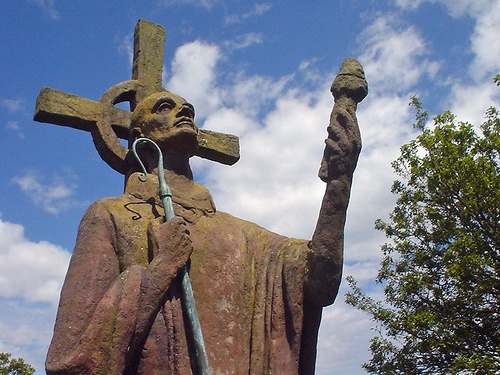
Today is the feast of St. Aidan of Lindisfarne, who entered into eternal life in AD 651.  He is often called "the Apostle to the English."  His statue on the holy island of Lindisfarne shows him bearing a torch, bringing light to a world mired in spiritual darkness, magic, oppression, and anxiety.  This shows the Church's task and setting remain essentially the same in every age.

Aidan was sent from that other "holy isle" in the Celtic north (Iona) to try and restart a failed mission led by a previous monk. This monk had spoken down to everyone, was of an irascible temper, and seemed to feel that people needed to come to him rather than he going out to them. He also thought that the Gospel could be propagated by spending his time with the "influencers" and powerful in Northumbria rather than with the ordinary folk. As a way of sharing New Life in Christ, it bombed.

Aidan essentially turned this model upside-down -- which is pretty much what authentic Christianity always does to so-called "normal" strategies of human power and invention.

He spoke humbly and with openness, not cloaking himself in arrogance or "know-it-all-ism." He was gentle in manner yet clearly revealing an inner strength and groundedness in kindness and Truth different from the magicians and wizards. He addressed real problems of poverty and slavery rather than consigning everything to unseen forces and talking in airy platitudes.

He walked everywhere (not using horses, then the symbol of power in transit) and spoke with everyone, high or low. This unnerved some of the high-ups in that very stratified society but it immediately struck the common people and opened doors to Aidan's message his predecessor could never have imagined. The results were spectacular. A form of Christianity -- rooted in the culture and practices of that place and time -- grew rapidly and without coercion. Eventually, an entire crop of holy people were produced in the next generation, which is always a sign God's blessing.

Aidan wasn't concerned with building an institution or a success-machine. In this way he differed from many who claim to follow Christ today, where the focus so often goes to the trappings of success and acknowledged achievement rather than true renewal of the person and the world around us.

Renewal of the Church has never really been the point of Christian mission. The Church is Christ's Body and has already been made glorious in Christ's resurrection and ascension, and through the giving of the Holy Spirit at Pentecost. The Church is forever alive, forever victorious over death, forever new. What isn't is the way the Church often goes about its work.

Much of the last century in our country the Church has acted rather like Aidan's failed predecessor: talking down to those outside, hanging out with elites, and being concerned with symbols of power rather than being like Christ in humility and simplicity. Aidan's witness so many centuries ago is memorable because of how it overturned merely human logic with divine love and unexpected freedom. 

What is needed today in the Church is not more relevance and techniques (read: success and control) but more servanthood, listening, and sharing from the treasury not of political/cultural power by ancient and ever-new wisdom -- the wisdom of God. This will, of course, sometimes lead to conflict not only with the "powers that be" but also those who are dedicated to ideologies opposed to the Gospel -- especially those which clothe themselves in "church-talk" while actually being predicated on sin. Yet, such a way of living inevitably attracts those who desire what Jesus, rather than Caesar, has to offer. We must simply be patient, focused, and undistracted in our work.

Such are the seeds of authenticity and simplicity Aidan brought to Northumbria well over one thousand years ago, and these are the seeds of renewal we must tend today.

The Collect for St. Aidan of Lindisfarne

O loving God, you called your servant Aidan from the cloister to re-establish the Christian mission in northern England: Grant that we, following his example, may use what you have given us for the relief of human need, and may persevere in commending the saving Gospel of our Redeemer Jesus Christ; who lives and reigns with you and the Holy Spirit, one God, for ever and ever. Amen.
  

Monday, August 29, 2022

The Martyrdom of St. John the Baptist: Telling the Truth


August 29 is the commemoration of the beheading of St. John the Baptist. It is a solemn day, with a story well-attested in the Holy Scriptures, long honored by the Church (though only recently recognized by the Episcopal Church, for some reason).

The Holy Forerunner's death is deeply connected to the story of his nativity (June 24) and the his father Zechariah's prophesy in Luke. It is also directly connected to Christ's nativity and our Savior's embodiment of Truth. We encounter the Baptist's significance and ministry each time we pray the Benedictus Dominus Deus at Morning Prayer -- which, depending on which canticle one uses, could be just about each morning.

Throughout the year, John plays a central part in the story of salvation. In Advent he heralds the coming Messiah by calling all to repent and prepare. His baptism of Christ is central to the entire logic and purpose of Epiphanytide. His boldness and proclamation of repentance is recalled again in Lent. His promise that the One he heralds will bring the Holy Spirit with fire binds Advent to Pentecost.

This omnipresence in the Church year mirror's John’s centrality to the Gospel narrative, from the beginning of Mark through the opening of the Book of Acts. His fierce insistence on divine truth and faithfulness in the face of earthly power is a foundation on which Jesus built and upon which the Christian Church’s ministry of prophetic witness flourishes. Because of his utter fidelity to God’s call, he died a martyr’s death – prefiguring Christ's death at the hands of unjust leaders, as well as the countless other who follow in his footsteps to this day.  Indeed, our day has seen the making of a vast number of martyrs, many beheaded in much the same manner as the Blessed Forerunner -- hidden away in dungeon and "secure locations."

John's witness with regard to the interaction of faith and political power speaks to us in especially potent ways today. His uncompromising commitment to telling the truth in the face of overwhelming secular power sets the standard for authentic Christian life -- and shows how weak and hypocritical many in the Church (lay and ordained, then and now) are when dealing with "the powers that be" when the Church becomes enmeshed with the "power of the sword."

When John said to Herod “you cannot have her” with regard to Herod’s liaison with Herodias, the wife of his brother Herod Philip, it was too much. John was just possibly endurable when he was taking on the religious leaders, but here he was crossing the line into the lane where the traffic is fast and unmerciful. Herodias, tired of Herod’s anxious shilly-shallying about John, wanted this meddling holy man dead and found a way to achieve it. Using the occasion of a drunken birthday party, she slyly planted her daughter as dancing bait for Herod’s inebriate lust. Wildly making public promises of largesse, Herod was in her debt…and Herodias's daughter took him down like an experienced hustler takes down a green rube just off the bus from Nowheresville. In the time it took for the music to stop, Herod was in over his head, and John was without his. The message was clear: Don’t get in the way of powerful people when reputation, politics, and personal cred are on the line. This is ever the case.

The portrait of arrogance, privilege, decadence, and drunkenness emerging here is remarkably appropriate to current events. With so many Christians being willing to go along with Herod's "might-makes-right" reasoning, and with nearly idolatrous levels of support given to politicians very much Herod's kin in terms of behavior by many "Christian" leaders as well as the rank-and-file, one could well imagine John the Baptist's head being lopped off with their quiet nod today. He would have to go, you see: he made the base angry.

The teaching potential of this holy day is great. It shows that to confront evil, we need endurance. Sometimes, it seems that evil actually wins; but its victory—like Herodias’s -- is only apparent. In reality, God’s power and truth is finally completely victorious. It survives continual assault as a vision and a desire. God's vision will forever keep popping up, no matter how many are "cancelled" by silencing or decollation. 

What is needed is an ongoing commitment to Gospel justice, even in the face of evil’s awful array of violence, lies, distortion, and corruption. To the last drop, the last moment, the last sentence, St. John the Baptist witnessed to such a commitment. This is why we keep this day.

This day reminds us that by following Jesus Christ as Lord (whom John heralded), we share in this revolutionary ministry of truth-telling. 

If we in the ordinary congregations of the Church take this vocation seriously, maybe even the so-called "leaders" of a heavily-compromised American Christianity follow the Holy Truth-Teller until the day when all lies are exposed and all elites humbled. Then the tragedy of this day will be crowned with true glory. As it is, we journey on in hope and faithfulness.


A Collect for the Martyrdom of St. John the Baptist

God our Father, you called John the Baptist to be the herald of your Son's birth and death. As he gave his life in witness to truth and justice, so may we strive to profess our faith in your Gospel. Grant this through our Lord Jesus Christ, your Son, who lives and reigns with you and the Holy Spirit, one God, for ever and ever. Amen.

Wednesday, February 2, 2022

A Light to Enlighten the Nations: The Feast of the Presentation


On the Feast of the Presentation


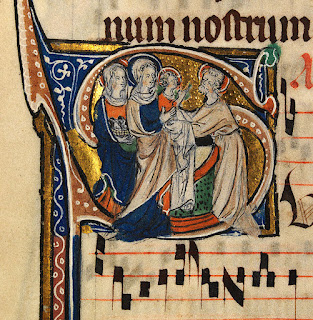
Today we rejoice that Christ has come into the Temple to be presented, in accordance with the Law of Moses, to His Father. The story is found in Luke 2: 22-40.


This is a day of extraordinary beauty. In it is fulfilled the yearning of an entire people…though secretly, quietly, gently. The ancient Temple has its true purpose revealed and completed: the presence of God in this Holy Place is now complete, and the hostility between humanity and God is being overcome by God's own initiative


Mary and Joseph witness in awe and wonder the meaning of this moment, treasuring it in their hearts as will all future disciples of Christ. A prophesy of struggle and suffering for Mary is pronounced, something true for her in a unique way, but also a fact for anyone who follows Christ and the Gospel Way authentically.


Yet, there is more. Aged Simeon holds the child who is his Messiah in his own arms, bringing age, infancy, and eternity together. Anna—another aged prophetess—so rejoices at the Messiah’s coming that all around her take note in her delight. It is a day marked by joy, a joy much like that of the Day of Resurrection which it prefigures.


Each person who confesses Christ is fundamentally alive in this joy. It is a mark of true discipleship. Young and old, insightful and simple, mystical and practical: we all share in the light of Christ’s presence. That presence transforms and fulfills us in ways we cannot comprehend or imagine. It reaches through us into the lives and needs of others. “The light has come into the world, and the darkness has not overcome it.”


For centuries, it has been the custom of those celebrating this feast to light small lamps or candles, recalling the light of Christ now come into the world—and especially the Holy Spirit given to us each as members of Christ's body. At Holy Baptism, a candle is presented to the newly-baptized (or a sponsor) to remind all present that this light is conferred and must be cherished and borne into the world.


Do we consciously bear Christ’s Light? Do we honor it? Do we see it as the one true gift—quite apart from our opinions, agendas, experiences, and goals—we have to give? Let us pray that this is so for us. To substitute something else for this light is to turn our back on the Savior, and to close the door on the mystery and power of the events celebrated on this beautiful day.


Rejoice with the Blessed Virgin, with St. Joseph, with aged Anna and Simeon on this day…and share the light given to you long after the candle you bear is extinguished!


A reading from a sermon by Sophronius, Patriarch of Jerusalem (7th Century)


Our lighted candles are a sign of the divine splendor of the one who comes to expel the dark shadows of evil and to make the whole universe radiant with the brilliance of his eternal light. Our candles also show how bright our souls should be when we go to meet Christ.


The Mother of God, the most pure Virgin, carried the true light in her arms and brought him to those who lay in darkness. We too should carry a light for all to see and reflect the radiance of the true light as we hasten to meet him.


The light has come and has shone upon a world enveloped in shadows; the Dayspring from on high has visited us and given light to those who lived in darkness. This, then, is our feast, and we join in procession with lighted candles to reveal the light that has shone upon us and the glory that is yet to come to us through him. So let us hasten all together to meet our God.


The true light has come, the light that enlightens every man who is born into this world. Let all of us, my brethren, be enlightened and made radiant by this light. Let all of us share in its splendor, and be so filled with it that no one remains in the darkness. Let us be shining ourselves as we go together to meet and to receive with the aged Simeon the light whose brilliance is eternal. Rejoicing with Simeon, let us sing a hymn of thanksgiving to God, the Father of the light, who sent the true light to dispel the darkness and to give us all a share in his splendor.


Through Simeon’s eyes we too have seen the salvation of God which he prepared for all the nations and revealed as the glory of the new Israel, which is ourselves. As Simeon was released from the bonds of this life when he had seen Christ, so we too were at once freed from our old state of sinfulness.


By faith we too embraced Christ, the salvation of God the Father, as he came to us from Bethlehem. Gentiles before, we have now become the people of God. Our eyes have seen God incarnate, and because we have seen him present among us and have mentally received him into our arms, we are called the new Israel. Never shall we forget this presence; every year we keep a feast in his honor.


Collect for the Feast of the Presentation


Almighty and everliving God, we humbly pray that, as your only-begotten Son was this day presented in the temple, so we may be presented to you with pure and clean hearts by Jesus Christ our Lord; who lives and reigns with you and the Holy Spirit, one God, now and for ever. Amen.

Tuesday, November 30, 2021

St. Andrew: Christian life and an Ordination Anniversary


May Andrew, gentlest of the saintly company
   Inspire forgiveness for our grievous trespasses
That we, sore burdened by offences manifold 
   At his petition may obtain deliverance

(Verse from a hymn on St. Andrew’s Day)


Almighty God, who hast given such grace to thine Apostle Saint Andrew, that he counted the sharp and painful death of the cross to be an high honour and a great glory; grant us to take and esteem all troubles and adversities which shall come to us for thy sake, as things profitable for us toward the obtaining of everlasting life. Through Jesus Christ thy Son our Lord, Who liveth and reigneth with thee, in the unity of the Holy Ghost, ever one God, world without end. Amen.

(The Collect for the Feast of St. Andrew, Apostle, in the 1549 Book of Common Prayer)


November 30th is the Feast of St. Andrew “the first-called,” as recorded in the Gospel according to St. John. St. Andrew is my “ordination patron,” since I was ordained to the sacred priesthood on this day in 1993. In addition to seeking his prayers as a companion on the journey, I have thought a great deal about my patron over the years, learning more about his particular ministry and gifts—both from the Holy Scriptures and subsequent pious tradition.


Perhaps known best as St. Peter’s brother, the Fourth Gospel records Andrew as having first been a disciple of John the Baptist before becoming acquainted with Jesus and eventually following him (and in turn inviting his brother Peter to meet Jesus). From this we can tell he had keen spiritual thirst and insight. Andrew listened so deeply to John’s message that he knew John was not the Messiah, recognizing (as others couldn't, it appears) John’s mission of preparing the way for the Messiah.


I keep this aspect of St. Andrew’s witness in mind as I go about pastoral ministry. It is so easy to become wrapped up in personalities or issues that I can miss the true message. When younger, I sometimes became quite wedded to a particular figure or movement in the Church without recognizing how such passions and loyalties can take my attention and focus from following Christ and his gospel. It is surprisingly—and sadly—easy to substitute another “gospel” for the one our Lord taught. Andrew’s witness challenges this. 


Another aspect of this Apostle which intrigues and guides me is his name. Andrew’s name in Greek means “manly,” or “valorous.” The fact he bore a Greek name rather than a Hebrew one (as did his brother Simon) suggests a family background operating more in the midst of the complex cultural currents of his time and place rather than in the backwaters or safe eddies of religious traditionalism. This also has a message for me. 


It is sometimes tempting for a person with my temperament to desire peace so much as to want to “climb back into the womb” (to borrow a phrase from Nicodemas) of religious purity and custom. This is not real discipleship or authentic Christianity—but an immature and selfish impulse to avoid the implications of following Christ. To show real maturity, true spiritual valor, we must be so deeply-grounded in Christ’s mind that we may follow wherever He leads without fear or complaint. It means being willing to take risks while not losing connection with the life-giving source of faith, vision, hope, and wisdom. This is the proper place of holy tradition.


This leads me to a final point of consideration: Andrew’s courageous and yet gentle nature. Tradition holds that Andrew was martyred on a cross, much like his brother Peter. These first disciples identified so deeply with Christ Jesus they were to die in a like manner as did he—emphasizing that the Christian life is not an escape from suffering but an encounter with it in Christ’s power and love, identifying more with Christ through them. 


This, in turn, leads to loving others more openly and speaking the truth in love. Andrew invited his brother Peter to meet Jesus: he didn't force or hector or shame him. The difference is at the heart of the Christianity I know and desire. Relinquishing the outcomes to Christ is a necessary part of surrendering to God--as step requiring humility and inner communion with the Lord.


I am thankful for having the “first-called” Apostle as my ordination patron. His witness inspires me in the sometimes difficult and tumultuous times in which we live to listen deeply, follow simply, and love courageously. While I am only a beginner in this journey, today I rejoice in the witness of a disciple who has left a record of “things profitable for us toward the obtaining of everlasting life” in his actions, words, and character. By God’s grace may it be so for us all.


Saturday, September 26, 2020

Making known the Mystery of God: Lancelot Andrews


Today we honor the life and witness of Bishop Lancelot Andrews (1555-1626). He was instrumental in the process by which the “King James” translation of the Bible took place (being responsible for translating much of the first five books himself), and was one of the greatest preachers and teachers of his age. His guide to prayer (Preces Privatae) remains one of the essential texts for understanding classical Anglican approaches to prayer, and his 96 Sermons represent, along with Hooker’s Lawes of Ecclesiastical Polity, perhaps the summit of early Anglican thought.

It was the gift of a collection of Andrewes’ prayers to me at age sixteen which began my pilgrimage to Anglicanism, and (along with his sermons) has kept me limber and faithful since. He is one of the truly great lights in my life, a father among the saints to me.


Here is what one Russian Orthodox author wrote about Andrewes:


If Andrewes was indeed a man of  his own time, which he wanted to make aware of the fact that the relationship of man to God is not an idea but an experience lived out in the Church, which itself is in the final analysis nothing other than the place where the Spirit blows and where one participates in the divine life, perhaps even because he was a man of his time and not an atemporal thinker, he joins those whom one calls the Father of the Church. Now they are called that because they knew how to communicate in their own time the sense of the experience of God, showing then to others who would come later what they had to do for their own time. Their paternity is in fact actively generative, and their sons and daughters are called, like Andrewes, to become living images of their Fathers, thus Fathers (and Mothers) in their turn: that is, people who transcend the limits of their own time.

From the conclusion to “Lancelot Andrewes the Preacher,”

 by Nicholas Lossky, Andrew Louth, translator (1991)


May we be found to be fathers and mothers of the faith in our own day!


The Collect for the Feast of Blessed Lancelot Andrewes, Bishop


Perfect in us, Almighty God, whatever is lacking of thy gifts: of faith, to increase it; of hope, to establish it; of love, to kindle it; that like thy servant Lancelot Andrewes we may live in the life of thy grace and glory; through Jesus Christ thy Son our Lord, who liveth and reigneth with thee and the same Holy Ghost, one God, now and for ever. Amen.


Monday, September 14, 2020

Looking to the Cross


"What Our Lord Saw from the Cross" by James Tissot

The people came to Moses and said, ‘We have sinned by speaking against the Lord and against you; pray to the Lord to take away the serpents from us.’ So Moses prayed for the people. And the Lord said to Moses, ‘Make a poisonous serpent, and set it on a pole; and everyone who is bitten shall look at it and live.’ So Moses made a serpent of bronze, and put it upon a pole; and whenever a serpent bit someone, that person would look at the serpent of bronze and live. (Numbers 21:7-9) 

Just as Moses lifted up the serpent in the wilderness, so must the Son of Man be lifted up, that whoever believes in him may have eternal life. (John 3:14)


Holy Cross Day is, along with Good Friday, one of the two great occasions in the Church year when we focus on the cross. The character of Holy Cross Day is distinguished from Good Friday by its sense of triumph and joy. It also has a practical quality: it asks the question “where do I look for salvation?” in matters great and small.


The scripture readings from Morning Prayer today point out the cross’s significance to believers by recalling the connection Jesus drew between himself and the story, recorded in the Old Testament book of Numbers, of the brazen serpent God instructed Moses to make when the people were dying from snakebite. This image of death, when raised up on a pole, would provide an antidote--if they would but cast their eyes upon it.


During their nighttime conference, our Lord reminded Nicodemus of this old and mysterious story. Jesus connected the serpent on a pole to his own impending crucifixion (“lifting up”), and forecast the reality for all who would follow him: We must look to the crucified Christ for salvation, for triumph over sin, death, and the power of darkness. This is the only path to eternal life. All others are false and point only to death.


Right now, as always, the world disagrees with this message. It says we must look not to the cross but to our screens for salvation. It demands focus on hatred, division, and bitterness rather than on God’s love in Christ. The world’s love of arrogance and violence is exalted in each news cycle, while for Christian disciples it is the humility and peace of Christ which sets the standard for our behavior. This shows in interesting, often small ways.


In recent years, with the advent of social media, it has become common for people to put down entire swathes of humans as “sheeple.” This portmanteau word made from sheep and people is never meant as a compliment. It is always a verbal sneer, usually written by folks who might be called “professional sneerers” – the sort of people who mocked Christ at the foot of the cross. I find it interesting when people who call themselves Christians employ this term: Christ himself was called the Lamb of God, and we are to be his sheep. For us, being a sheep is actually a compliment: we are one of the Lord’s flock, and we look to the Good Shepherd for life, guidance, and peace. It is that "looking" we are thinking about today.


To look at Christ upon the cross means not to look down, but up—up from the earth and its ceaseless round of demeaning and demonizing others—to focus on the One who loves all people as they are, without precondition. This is eternal life. Do we get this from looking at our phone or our computer? Are our comments, postings, and positions worthy of the Lord? Are we becoming more like Christ, or more like the mockers at his crucifixion?


This motion—of looking up to Christ and seeing in him the source of love needed for us to serve, care for, and honor (not judge or demean) our neighbor—is the motion of true Christian humility for the “sheeple” God loves and for whom Christ died. Once we learn this movement, we will question our own smug self-assurance, and will become revolted by the toxic, embittered words and actions we may formerly have engaged in, let pass, or shamefully enjoyed.


Holy Cross Day is a good time to see just where I am looking for salvation: to ideology, or perhaps to some unassailable position from which I may look down on others? If I look to anything other than Christ lifted up on the cross, I am simply an idolater, “and the truth is not in me.” But, if I turn to Christ in humble repentance and love, I am being healed from the serpent’s bite, and can journey on in God’s love and strength, so that I may see Christ in my neighbor and do the reconciling work of the Gospel in justice, truth, and mercy.


The Collect for the Feast of the Holy Cross


Almighty God, whose Son our Savior Jesus Christ was lifted high upon the cross that he might draw the whole world to himself: Mercifully grant that we, who glory in the mystery of our redemption, may have grace to take up our cross and follow him; who lives and reigns with you and the Holy Spirit, one God, in glory everlasting. Amen.