Showing posts with label Christian Life. Show all posts

Thursday, August 29, 2024

The Bible in the Weeds


On one of my recent litter-collection jaunts at church I came upon a surprising sight. A bag (likely stolen) had been eviscerated in a corner of the property, its picked-over contents strewn about, one of which was a battered and dew-spattered copy of the New Testament. Its gold lettering sparkled in the morning light and looked as surprised to be there as was I to find it.

At first I thought of how odd it was to find the majestic King James Version of the New Testament flung promiscuously on the earth and how it conflicted with the absolute rule I was taught as a child that the sacred scriptures must never be allowed to touch the ground. Then I reflected on how we never know where we will find the sacred in our daily life--in the form of people, nature, or even in what appears at first to be garbage.

I took the Bible into my office to dry it out. For some reason it seemed oddly important to me and I kept thinking about it, but couldn't figure out why. Then it came to me; it was the feeling of recognition. I, too, have been cast by circumstance into odd and confusing situations and had to rely on the care of others to be picked up from my desperate condition. If I hadn't been out to clean up trash that morning the book would be have been drenched in the rain and ruined. It all felt like a parable of rescue.

For a time, I was wondering what to do with this book. Now I know: I'm going to read from it as a form of intercession for all those people--myself included--who feel lost and need someone to go looking for them, even accidentally.

The Bible in the weeds describes all of us at one time or another: sacred but dumped, disregarded but message-bearing, lost but still precious.

Keep on walking in the world, looking for who and what needs finding--even if in an unexpected form. It could be the self you thought stolen, the neighbor you never met, or the key to opening your heart all over again.

Brandon+


Tuesday, August 6, 2024

Going with Jesus to Glory: The Feast of the Transfiguration


When Jesus said that some of those who heard him speak would see him come in glory before they died, he was not using hyperbole. Only a few days later, he took those disciples best-suited to this experience with him on a day-hike up a nearby ridge. At its summit they saw him elevated in the air, glow with an unearthly light, and be joined by two of the greatest figures in Jewish history: Moses and Elijah. A cloud then enveloped them all, and a voice from it spoke: “This is my Son, my Chosen: listen to him!”


The Feast of the Transfiguration records an event found in the Gospel accounts of Matthew, Mark, and Luke. This event looks forward through the crushing experience of the Crucifixion and mysterious event of the Resurrection toward an event which has yet to come: Christ’s return in glory. It is an event which frames all of the Gospel story within the context of glory—God’s glory, and ours.


Authentic Christianity refuses to conform the human person to our current state. The often broken, divided, and abused condition of humanity that we see all around us is not our destiny. It is our current state, but it is temporary. The Gospel shows us who we really are: made in the image and likeness of God and the worthy object of God’s loving, healing work. The distorted, pessimistic picture of humanity some forms of Christianity peddle is nothing more than a concession to this condition and will always result in more of the same.


The Gospel vision for humanity is not found in shame and self-loathing. Proceeding from humility and repentance, it ascends the holy mountain of spiritual knowledge and growth toward true awareness of God, neighbor, creation, and self. That knowledge is expressed by the word “glory.” The glorious beauty of God, the radiant splendor the creation, and the shining, glorious reflected light of God found in the human person restored to wholeness in Christ Jesus.


To follow the command given by the divine voice to “listen to Christ” means far more than just following a set of rules or prescribed actions. It is the path back to our true selves as found in right relationship with God, neighbor, and self. It means turning our gaze from the damage in our life toward the image of divine glory seen in Christ on the Holy Mountain.  Once we do this, we begin to perceive our own destiny—and that of every other person embraced by this light.


Today’s feast looks back to an event in history which points us toward another event already accomplished in Jesus Christ and now available to us through Him. Once we take that Transfigured moment seriously, we may share in it ourselves through worship, prayer, service, deeds of love and compassion, contemplation, work and recreation, and the myriad other ways it may be experienced.


In so doing, we will find that the Holy Mountain is not only in a far-off land, but within each of us and available at any hour.  All we must do is turn from ourselves, behold Jesus, and listen to Him.  Then, the cloud descends anew and we are partakers of His glory once more.

Wednesday, July 3, 2024

The Unexpected Voice: Balaam’s Donkey and the Church


Like all others in the Episcopal Church who use the Lectionary to read and pray the Scriptures daily, I had the pleasure of hearing the story of Balaam’s donkey this week (Numbers 22:21-38).  This passage often raises smiles when read in groups—or, even alone—for its combination of naïve (in its original sense) storytelling, vivid characterization, and surprising content.  It is, however, worthy of some consideration and reflection for the serious message it bears amidst the irony and comedy.

Balaam is riding his donkey while going to meet Balak for what would turn out to be an unsatisfactory stint of employment to curse the Hebrews.  Along the way the donkey sees the angel of the Lord, with drawn sword, in the road.  Sensibly, the donkey detours into a nearby field.  Balaam whacks the donkey; smarting, the poor beast obeys and continues on.


A little later, the angelic figure returns, this time in a lane with walls on either side.  Obediently the donkey squeezes between the angel and the wall—no mean feat—and continues on.  This is a courageous as well as skillful and obedient donkey.  However, during this delicate maneuver the donkey had to rub up against the wall, crushing Balaam’s foot.  More whacking ensues.


Finally (ah, yes, three times!) the angel appears to the unnamed donkey in such a way that there was no way around.  Perhaps surrendering to its fate, the critter simply folds its legs and rests on the ground.  Then all hell breaks loose.


Angry and, one presumes, mystified, Balaam uses his staff to beat the donkey. The picture is both very sad and very ironic.  The Seer who cannot see beats the “dumb animal” that can.  This image, which makes one think of St. Paul’s teaching that all Creation groans under the consequences of human sin, is a pitiable miniature of all the folly and spiritual blindness humans commit and suffer from throughout the ages, and the toll it exacts on everything.


Then perhaps comes the real point of the story: the donkey speaks.  “What have I done to you, that you have struck me these three times?"  Balaam doesn’t blink, even for second, at this.  The text has him shoot back his self-justification: “Because you have made a fool of me! I wish I had a sword in my hand! I would kill you right now!"


Here is revealed the condition of everyone who abandons simple humanity to live in the ego.  All behavior is justified, no matter how vile, because “you have made a fool of me!”  Our appearance, our standing, our control, our comfort, our need to be respected by others—is a bottomless pit of rage, ready to open up whenever we are thwarted.  People, animals, objects, the Creation around us, even God are all swept into the drama of our ego-centered universe, culminating in Balaam’s threat to annihilate the donkey.  A surreal picture of a man witnessing a miracle who threatens to extinguish the very miracle itself is thus made complete.


To this nihilistic outburst (which is as comic as tragic), the donkey calmly addresses himself.  He patiently pulls Balaam from the edge of insanity with these logical words: “Am I not your donkey, which you have ridden all your life to this day? Have I been in the habit of treating you this way?"  


Balaam considers this request—never commenting on the novelty of the conversation once—and replies simply: “No.”  That is all he says.  Stopped in the midst of his violent fulminations by the solid and honest reasonings of his donkey, servant, and (really) friend, Balaam ends up climbing off the ledge and resumes being human.  Only at that moment are Balaam’s eyes opened by God to see the angel in the road, with drawn sword in his hand, blocking the way.


The angel is not amused by Balaam’s violence.  Rather than being merely a quaint detail of a folk tale, the striking of the innocent and faithful donkey is brought up as an accusation against Balaam.  God sees all we do—in the heat of the moment or in recollected calm.  We are responsible.


The angel then speaks at some length in praise of the donkey, saying that if it had not reacted so wisely, the angel would have killed Balaam and spared the donkey.  The issue at hand is not the donkey’s disobedience or obstreperousness, but Balaam’s perversity—his intention to thwart the way of the Hebrews as they journey to the Promised Land.  By standing in the way of Balaam, the angel is expressing what Balaam is trying to do to God.  Only then, after listening to a talking donkey and a sword-bearing angel, does Balaam finally become fully human: he repents in word and deed and agrees to do what God commands.


Balaam’s repentance eventually leads to the comical scene which follows: blessings coming out of this paid curser’s mouth.  Balak’s desire for control over God and the Hebrew people is upended by the very “donkey” he has hired to do his bidding.  The irony is complete.


We in the Church, however, would do well to think over this seemingly odd story with great care.  When the faithful souls who do the hard work in the Church’s life, often for years and without comment or criticism, suddenly balk, what do the leaders do?  Do we dismiss them?  Figuratively strike them by demanding compliance with our goals?  Do we end up saying something very similar to the Pharisees in John 9:34: “‘You were born entirely in sins, and are you trying to teach us?" Or, in John 7:49, when the educated leadership speaks of the crowds turning to Jesus: “…this crowd, which does not know the law—they are accursed.”


And beyond balking, what if these same people should dare speak? The unaccustomed voice in the Church, in our communities, in our neighborhood, family, or online—what do we do when this voice speaks?  Balaam’s donkey could see what the Seer could not.  The quiet person, who does the work but does not “theologize” in the Church or “take the floor” in the workplace or family or online likely sees the reality of what is happening from a vantage point completely beyond the people "at the helm."  When such a person balks at plans, or turns away from the announced agenda, what do we do?  Do we enquire, consider, listen?  Or, do we metaphorically strike out at the suddenly out-of-turn or unpliable messenger?


In the current era of the Culture War heresy it has been fashionable to say that this sin is most often committed by the “side” one opposes, but my experience suggests that it is really an equal-opportunity error.  Whenever our wills become perverted from the basic will of God we end up “walloping the donkey,” so-to-speak.  When we are lost in our ideology, our supposed powers or knowledge or authority, we re-enact this story in our own way.  The Church is, sadly, especially vulnerable to this due to our willingness to turn opinion into truth.  This is particularly evident when we hear little of Jesus and much of ideology, "tradition," or the need for "relevance" in the conversation.


The story of Balaam’s donkey has many meanings, of course; but for me during this year’s reading, it is a reminder to consider what I am becoming as I go through life—based on how I perceive and treat everyone and everything along the way.  It is also an invitation to grasp the freedom found in repentance.


When I was growing up, my mother would sometimes say to me: “Just who do you think you are?”  It is a worthwhile question, as also is “Just who do you think others are?” whenever we are thwarted in our plans and expectations.  An angel just might be standing before us.


Most of all: don’t beat the donkey.  Listen to it.  You may have been riding a true Seer and Prophet all along.

Wednesday, February 2, 2022

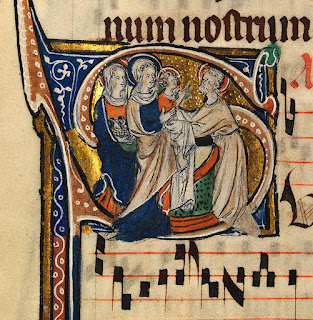
A Light to Enlighten the Nations: The Feast of the Presentation


On the Feast of the Presentation


Today we rejoice that Christ has come into the Temple to be presented, in accordance with the Law of Moses, to His Father. The story is found in Luke 2: 22-40.


This is a day of extraordinary beauty. In it is fulfilled the yearning of an entire people…though secretly, quietly, gently. The ancient Temple has its true purpose revealed and completed: the presence of God in this Holy Place is now complete, and the hostility between humanity and God is being overcome by God's own initiative


Mary and Joseph witness in awe and wonder the meaning of this moment, treasuring it in their hearts as will all future disciples of Christ. A prophesy of struggle and suffering for Mary is pronounced, something true for her in a unique way, but also a fact for anyone who follows Christ and the Gospel Way authentically.


Yet, there is more. Aged Simeon holds the child who is his Messiah in his own arms, bringing age, infancy, and eternity together. Anna—another aged prophetess—so rejoices at the Messiah’s coming that all around her take note in her delight. It is a day marked by joy, a joy much like that of the Day of Resurrection which it prefigures.


Each person who confesses Christ is fundamentally alive in this joy. It is a mark of true discipleship. Young and old, insightful and simple, mystical and practical: we all share in the light of Christ’s presence. That presence transforms and fulfills us in ways we cannot comprehend or imagine. It reaches through us into the lives and needs of others. “The light has come into the world, and the darkness has not overcome it.”


For centuries, it has been the custom of those celebrating this feast to light small lamps or candles, recalling the light of Christ now come into the world—and especially the Holy Spirit given to us each as members of Christ's body. At Holy Baptism, a candle is presented to the newly-baptized (or a sponsor) to remind all present that this light is conferred and must be cherished and borne into the world.


Do we consciously bear Christ’s Light? Do we honor it? Do we see it as the one true gift—quite apart from our opinions, agendas, experiences, and goals—we have to give? Let us pray that this is so for us. To substitute something else for this light is to turn our back on the Savior, and to close the door on the mystery and power of the events celebrated on this beautiful day.


Rejoice with the Blessed Virgin, with St. Joseph, with aged Anna and Simeon on this day…and share the light given to you long after the candle you bear is extinguished!


A reading from a sermon by Sophronius, Patriarch of Jerusalem (7th Century)


Our lighted candles are a sign of the divine splendor of the one who comes to expel the dark shadows of evil and to make the whole universe radiant with the brilliance of his eternal light. Our candles also show how bright our souls should be when we go to meet Christ.


The Mother of God, the most pure Virgin, carried the true light in her arms and brought him to those who lay in darkness. We too should carry a light for all to see and reflect the radiance of the true light as we hasten to meet him.


The light has come and has shone upon a world enveloped in shadows; the Dayspring from on high has visited us and given light to those who lived in darkness. This, then, is our feast, and we join in procession with lighted candles to reveal the light that has shone upon us and the glory that is yet to come to us through him. So let us hasten all together to meet our God.


The true light has come, the light that enlightens every man who is born into this world. Let all of us, my brethren, be enlightened and made radiant by this light. Let all of us share in its splendor, and be so filled with it that no one remains in the darkness. Let us be shining ourselves as we go together to meet and to receive with the aged Simeon the light whose brilliance is eternal. Rejoicing with Simeon, let us sing a hymn of thanksgiving to God, the Father of the light, who sent the true light to dispel the darkness and to give us all a share in his splendor.


Through Simeon’s eyes we too have seen the salvation of God which he prepared for all the nations and revealed as the glory of the new Israel, which is ourselves. As Simeon was released from the bonds of this life when he had seen Christ, so we too were at once freed from our old state of sinfulness.


By faith we too embraced Christ, the salvation of God the Father, as he came to us from Bethlehem. Gentiles before, we have now become the people of God. Our eyes have seen God incarnate, and because we have seen him present among us and have mentally received him into our arms, we are called the new Israel. Never shall we forget this presence; every year we keep a feast in his honor.


Collect for the Feast of the Presentation


Almighty and everliving God, we humbly pray that, as your only-begotten Son was this day presented in the temple, so we may be presented to you with pure and clean hearts by Jesus Christ our Lord; who lives and reigns with you and the Holy Spirit, one God, now and for ever. Amen.

Tuesday, December 14, 2021

Christ the Victor


Here is a perfect expression of how the Early Church understood the mystery of salvation. Here, St. Cyril is commenting on St. Peter’s confession of Jesus as the Messiah and Christ’s response to this confession. Note how Cyril views the Cross and Resurrection as part of a process of salvation, and especially how the Paschal Mystery is an overthrowing of tyranny and a shared victory for us all rather than simply the payment of a debt owed to God. This “Christus Victor” understanding of salvation is what we proclaim in the Episcopal Church, leading to a deeper appreciation of God’s perfect love, which “casts out fear.” (1 John 4:18). This passage also makes clear that Christ’s teachings and the Paschal Mystery are a united reality—the former being completed by the latter. Finally, such an understanding of salvation makes clear our response to share the faith lovingly by way of response and action rather than remaining passive viewers or recipients.


When, however, the disciple had professed his faith, [Christ Jesus] charged them, it says, and commanded them to tell it to no one: “For the son of man,” he said, “is about to suffer many things, and be rejected, and killed, and the third day he shall rise again.” And yet how was it not rather the duty of disciples to proclaim him everywhere? For this was the very business of those appointed by him to the apostleship. But as the sacred Scripture says, “there is a time for everything.” There were things yet unfulfilled which must also be included in their preaching of him, such as were the cross, the passion, the death in the flesh, the resurrection from the dead, that great and truly glorious sign by which testimony is born of him that Emmanuel is truly God and by nature the Son of God the Father. For that he utterly abolished death, and he faced destruction, and spoiled hell, and overthrew the tyranny of the enemy, and took away the sin of the world, and opened the gates above to the dwellers upon earth, and united earth to heaven; these things proved him to be, as I said, in truth God. He commanded them, therefore, to guard the mystery by a seasonable silence until the whole plan of the dispensation should arrive at a suitable fulfillment. 

St. Cyril of Alexandria (c. 376 – 444), from Commentary on Luke, Homily 49.

Tuesday, November 30, 2021

St. Andrew: Christian life and an Ordination Anniversary


May Andrew, gentlest of the saintly company
   Inspire forgiveness for our grievous trespasses
That we, sore burdened by offences manifold 
   At his petition may obtain deliverance

(Verse from a hymn on St. Andrew’s Day)


Almighty God, who hast given such grace to thine Apostle Saint Andrew, that he counted the sharp and painful death of the cross to be an high honour and a great glory; grant us to take and esteem all troubles and adversities which shall come to us for thy sake, as things profitable for us toward the obtaining of everlasting life. Through Jesus Christ thy Son our Lord, Who liveth and reigneth with thee, in the unity of the Holy Ghost, ever one God, world without end. Amen.

(The Collect for the Feast of St. Andrew, Apostle, in the 1549 Book of Common Prayer)


November 30th is the Feast of St. Andrew “the first-called,” as recorded in the Gospel according to St. John. St. Andrew is my “ordination patron,” since I was ordained to the sacred priesthood on this day in 1993. In addition to seeking his prayers as a companion on the journey, I have thought a great deal about my patron over the years, learning more about his particular ministry and gifts—both from the Holy Scriptures and subsequent pious tradition.


Perhaps known best as St. Peter’s brother, the Fourth Gospel records Andrew as having first been a disciple of John the Baptist before becoming acquainted with Jesus and eventually following him (and in turn inviting his brother Peter to meet Jesus). From this we can tell he had keen spiritual thirst and insight. Andrew listened so deeply to John’s message that he knew John was not the Messiah, recognizing (as others couldn't, it appears) John’s mission of preparing the way for the Messiah.


I keep this aspect of St. Andrew’s witness in mind as I go about pastoral ministry. It is so easy to become wrapped up in personalities or issues that I can miss the true message. When younger, I sometimes became quite wedded to a particular figure or movement in the Church without recognizing how such passions and loyalties can take my attention and focus from following Christ and his gospel. It is surprisingly—and sadly—easy to substitute another “gospel” for the one our Lord taught. Andrew’s witness challenges this. 


Another aspect of this Apostle which intrigues and guides me is his name. Andrew’s name in Greek means “manly,” or “valorous.” The fact he bore a Greek name rather than a Hebrew one (as did his brother Simon) suggests a family background operating more in the midst of the complex cultural currents of his time and place rather than in the backwaters or safe eddies of religious traditionalism. This also has a message for me. 


It is sometimes tempting for a person with my temperament to desire peace so much as to want to “climb back into the womb” (to borrow a phrase from Nicodemas) of religious purity and custom. This is not real discipleship or authentic Christianity—but an immature and selfish impulse to avoid the implications of following Christ. To show real maturity, true spiritual valor, we must be so deeply-grounded in Christ’s mind that we may follow wherever He leads without fear or complaint. It means being willing to take risks while not losing connection with the life-giving source of faith, vision, hope, and wisdom. This is the proper place of holy tradition.


This leads me to a final point of consideration: Andrew’s courageous and yet gentle nature. Tradition holds that Andrew was martyred on a cross, much like his brother Peter. These first disciples identified so deeply with Christ Jesus they were to die in a like manner as did he—emphasizing that the Christian life is not an escape from suffering but an encounter with it in Christ’s power and love, identifying more with Christ through them. 


This, in turn, leads to loving others more openly and speaking the truth in love. Andrew invited his brother Peter to meet Jesus: he didn't force or hector or shame him. The difference is at the heart of the Christianity I know and desire. Relinquishing the outcomes to Christ is a necessary part of surrendering to God--as step requiring humility and inner communion with the Lord.


I am thankful for having the “first-called” Apostle as my ordination patron. His witness inspires me in the sometimes difficult and tumultuous times in which we live to listen deeply, follow simply, and love courageously. While I am only a beginner in this journey, today I rejoice in the witness of a disciple who has left a record of “things profitable for us toward the obtaining of everlasting life” in his actions, words, and character. By God’s grace may it be so for us all.


Thursday, March 12, 2020

Spiritual Communion during the season of coronavirus


Spiritual Communion

When unable to attend the Holy Eucharist

During this national health emergency, many people will be advised not to attend public worship; some will have their access to communion in a care center, hospital, or at home disrupted; many churches will be closed for a season. This will lead to a lack of normal sacramental support and communal encouragement.

The Church has long had a way to approach such difficult circumstances which both affirms the centrality of the Eucharist yet also accepts that, in the temporal affairs of humans, our preferred and normative practices may not always be possible.

The Book of Common Prayer reminds us that if one is unable to actually consume the consecrated bread and wine due to extreme sickness or disability, the desire is enough for God to grant all the benefits of communion. When being present at a celebration of the Eucharist is absolutely impossible, this act of prayer and meditation can provide the means by which you can associate yourself with the Eucharistic Action and open yourself to God's grace and blessing.

X     X     X


Blessed be GOD, X Father, and of the Son, and of the Holy Spirit. And blessed be his kingdom, now and forever. Amen.

Collect
Let the power of the Holy Spirit come upon me, O Lord, I pray you: to cleanse my heart and defend me from all adversities. Through Jesus Christ our Lord. Amen.

Read the following lessons from scripture, or read the appointed lessons for the day

Epistle (Revelation 3:20)
Listen! I am standing at the door, knocking; if you hear my voice and open the door, I will come in to you and eat with you, and you with me.

The Gospel (St. John 15:5)
I am the vine, you are the branches. Those who abide in me and I in them bear much fruit, because apart from me you can do nothing.

In your own words, pray for your needs, for those of others, for the peace of the world, and for the Church. After offering these intercessions, continue with the

Act of Contrition
O God, I confess my sin against you, the author of life and giver of all good things, and I humbly repent. Especially, I confess.... Forgive me for Jesus’ sake, and grant me the grace to walk in your ways hereafter. Amen.

Act of Reception
In union, dear Lord with the faithful at every altar of your Church where the Holy Mysteries of your blessed Body and Blood are being celebrated and received (and remembering particularly my own parish and those worshiping there), I long to offer you praise and thanksgiving for creation and for all the blessings of this life, for the redemption won for us by your life, death, and resurrection, for the means of grace and the hope of glory (and particularly for the blessings given me...).

I believe that you are truly present to your people in the Holy Sacrament. And since I cannot now receive you sacramentally, I pray you to come spiritually into my heart. I unite myself to you, and embrace you with all the affection of my soul. Let nothing separate me from you; let me serve you in this life until, by your grace, I come to your glorious kingdom and unending peace. Amen.

    Our Father...

Come Lord Jesus, dwell with your servant in the fullness of your strength, in the perfection of your ways, and in the holiness of your spirit, and rule over every hostile power in the might of the Spirit, and to the glory of the Father. Amen.

The Body and Blood of our Lord Jesus Christ preserve my body and soul unto everlasting life. Amen.

And may the peace of God, which passes all understanding, keep my heart and mind in the knowledge and love of God, and of his Son Jesus Christ my Lord: and the blessing of God Almighty, the Father X the Son, and the Holy Spirit, be with me now and always. Amen.

Act of Praise and Thanksgiving
 X Blessed, praised, hallowed, and adored be Jesus Christ on his high throne of glory in heaven, in the most Holy Sacrament of the altar, and in the hearts of his faithful people. Amen.
                                                                                                               
(Based on various sources, esp. the new St. Augustine's Prayer Book)

Saturday, January 25, 2020

The Conversion of St. Paul: Medicine for our own journey


Today is the annual celebration of St. Paul’s conversion. It is also is an occasion to reflect on the Blessed Apostle’s extraordinary story and how it relates to our own. The reading from Philippians appointed in the Daily Office points to the transformation he underwent—one from a certainty in the Law to a certainty in the Love of Christ, which fulfills and transcends the Law of Moses. 

It is this characteristic of total surrender, a desire for complete union with God—of being “in Christ” no matter the cost, which marks St Paul’s thought and writings. It also sets the goal for all Christians in how we approach the struggles and challenges on our own journey. 

Sometimes we allow the distractions and “options” of life to cloud the simple truth we hold: that in us, Christ is gaining victory, and by that victory, we are overcoming the world, sin, and death. We are "new creations." Today is a blessed opportunity to re-affirm the foundation of our life: Jesus Christ crucified, risen, and glorified. All else must flow from this fundamental identity and loyalty.

To aid in this, here is a passage in praise of St. Paul from one of the Early Church’s greatest preachers; in it we see once more the optimism, hope, and strength possible by putting our trust in Christ, and not in this world’s powers or passions. May it fuel renewed courage and clarity in our lives!

Paul, more than anyone else, has shown us what man really is, and in what our nobility consists, and of what virtue this particular animal is capable. Each day he aimed ever higher; each day he rose up with greater ardor and faced with new eagerness the dangers that threatened him. He summed up his attitude in the words: “I forget what is behind me and push on to what lies ahead.” When he saw death imminent, he bade others share his joy: “Rejoice and be glad with me!” And when danger, injustice and abuse threatened, he said: “I am content with weakness, mistreatment and persecution.” These he called the weapons of righteousness, thus telling us that he derived immense profit from them.

Thus, amid the traps set for him by his enemies, with exultant heart he turned their every attack into a victory for himself. Constantly beaten, abused and cursed, he boasted of it as though he were celebrating a triumphal procession and taking trophies home, and offered thanks to God for it all: “Thanks be to God who is always victorious in us!”

This is why he was far more eager for the shameful abuse that his zeal in preaching brought upon him than we are for the most pleasing honors, more eager for death than we are for life, for poverty than we are for wealth.

He yearned for toil far more than others yearn for rest after toil. The one thing he feared, indeed dreaded, was to offend God; nothing else could sway him. Therefore, the only thing he really wanted was always to please God.

The most important thing of all to him, however, was that he knew himself to be loved by Christ. Enjoying this love, he considered himself happier than anyone else; were he without it, it would be no satisfaction to be the friend of principalities and powers.

He preferred to be thus loved and be the least of all, or even to be among the damned, than to be without that love and be among the great and honored. To be separated from that love was, in his eyes, the greatest and most extraordinary of torments; the pain of that loss would alone have been hell, and endless, unbearable torture.

So too, in being loved by Christ he thought of himself as possessing life, the world, the angels, present and future, the kingdom, the promise and countless blessings. Apart from that love nothing saddened or delighted him; for nothing earthly did he regard as bitter or sweet.
-- From a Homily of St. John Chrysostom, Bp. of Constantinople

Monday, January 14, 2019

Praying for Christian Unity


The Unity of the Church is not an “extra.” It is essential for effective ministry. Each year, we pray for that unity to grow and deepen in our divided Christian witness. Each year the week of prayer will begin with the Feast of the Confession of St. Peter the Apostle and concludes with the Feast of the Conversion of St. Paul the Apostle, thus emphasizing the unity of these two Apostles (who were both martyred in the persecution under Nero) and connecting the primacy of Peter (favored by many Roman Catholics) with the liberty of conscience so championed by Paul (favored by many Protestants) into one whole offering of prayer, praise, and mission.

During this time we are all called to remember that the division between Christians is perhaps the greatest scandal and failing among us. It so deeply vitiates the witness of the Gospel in many places that no amount of evangelism or church-growth efforts will suffice. We must overcome our divisions.

To do this, we need only turn to our own baptism. In recognizing all those who are baptized with water in the Name of the Trinity as fellow Christians, the modern Episcopal Church has taken a great step toward a basic unity with other traditions. The Apostolic Faith we emphasize is fully sufficient to meet the need, providing both the essential saving message of Salvation and the necessary humbling of our various “traditions” so we may live out Our Lord’s call to bring the Gospel to all peoples.

This work must be done in prayer and in the hearts of individual believers as well as in wider settings and groups. Until we understand that division in the Church is a sin and a violation of our baptismal covenant, and until we accept that unity comes not from institutional or bureaucratic initiatives but from participation in the Unity of the Triune God, the present fractured condition of the Church will remain the hideous and shameful wrong it is. Only prayer can overcome this.

This following prayers are traditionally offered in the mid-morning, recalling the hour of Pentecost when the Church was given the Holy Spirit so that it might accomplish its mission in unity and love. They may also be part of your morning or evening prayers during this week, and as part of our preparation for the Holy Eucharist.

* * *

A Memorial for Visible Unity in the Christian Faith

Antiphon: Jerusalem is built as a city that is at unity with itself.

V. O pray for the peace of Jerusalem;
R. They shall prosper that love you.

Let us pray.

Grant, we pray you, Almighty God, to the whole Christian people unity, peace, and true concord, both visible and invisible; through Jesus Christ our Lord. Amen.

O Lord Jesus Christ, who said to your Apostles, Peace I leave with you, my peace I give unto you; Regard not our sins, but the faith of your Church, and grant her that peace and unity which is agreeable to your will; who lies and reigns God for ever and ever. Amen.

For the Church (BCP p. 816)

Gracious Father, we pray for thy holy Catholic Church. Fill it with all truth, in all truth with all peace. Where it is corrupt, purify it; where it is in error, direct it; where in any thing it is amiss, reform it. Where it is right, strengthen it; where it is in want, provide for it; where it is divided, reunite it; for the sake of Jesus Christ thy Son our Savior.  Amen.

For the Unity of the Church (BCP p. 818)

O God the Father of our Lord Jesus Christ, our only Savior, the Prince of Peace: Give us grace seriously to lay to heart the great dangers we are in by our unhappy divisions; take away all hatred and prejudice, and whatever else may hinder us from godly union and concord; that, as there is but one Body and one Spirit, one hope of our calling, one Lord, one Faith, one Baptism, one God and Father of us all, so we may be all of one heart and of one soul, united in one holy bond of truth and peace, of faith and charity, and may with one mind and one mouth glorify thee; through Jesus Christ our Lord. Amen.

For the Unity of the Church (BCP p. 255)

Almighty Father, whose blessed Son before his passion prayed for his disciples that they might be one, as you and he are one: Grant that your Church, being bound together in love and obedience to you, may be united in one body by the one Spirit, that the world may believe in him whom you have sent, your Son Jesus Christ our Lord; who lives and reigns with you, in the unity of the Holy Spirit, one God, now and for ever.  Amen.

Thursday, October 18, 2018

St. Luke, Evangelist of the True Physician


As we celebrate the Feast of St. Luke, the Collect used for this day adroitly combines two things we know about him from the sacred scripture into one prayer:

Almighty God, who inspired your servant Luke the physician to set forth in the Gospel the love and healing power of your Son: Graciously continue in your Church this love and power to heal, to the praise and glory of your Name; through Jesus Christ our Lord, who lives and reigns with you, in the unity of the Holy Spirit, one God, now and for ever. Amen.

By emphasizing these two things together, the prayer reminds us of the spiritual truth that the Gospel, when truly preached and truly received, always leads to the healing of the human person, a deepening of proper love for God, neighbor, and self, and the right praise of God.

As a pastor of souls, one of the ongoing facets of spiritual care I experience and try to share is the unified reality of True Teaching and True Healing. When the Gospel is received from God in loving humility and lived with that same form of humility, it results in the healing of the soul. Old wounds are seen for what they are, exposed to God’s mercy and truth, and gradually what was either an open sore or painful scar tissue is made into a place of sacred encounter, registering the reality of suffering but also the unique powerof divine love to overcome, renew, and reveal.

When I was a child my family took a vacation in North Carolina. This afforded a person who had grown up with the cold Pacific ocean in Oregon the opportunity to swim in warm sea waters. It was delightful in the extreme. While doing so, I managed to gash one of my toes quite deeply on an unseen object, severing a nerve and bringing an idyllic experience to a sudden end. We didn’t seek any medical care, letting nature take its course. After the wound healed I had an uncomfortable scar and some nerve damage. Afterwards, each time I walked barefoot I was reminded of what had happened. It took years for me to stop feeling pain from it.

When we receive spiritual or emotional trauma, we often develop a psychic form of scar tissue that is both inflexible and painful. Such pain can become habitual, unnoticed…but it remains real and finds its way out into the world through our thoughts, words, choices, and motives in all our relationships and activities. The way this pain comes through to others may remain opaque to us for many years—or even for the remainder of our life. It may even distort or cut off our communion with God. This is one of the saddest truths I know.

The Gospel is not simply a book or words: it is a reality of encounter with God and thus with the divine, loving purpose for us. Christ Jesus embodied the Gospel. 

St. Luke’s Gospel account begins with his assurance that “I too decided, after investigating everything carefully from the very first, to write an orderly account for you…so that you may know the truth concerning the things about which you have been instructed” (Luke 1:3-4)as a way of saying that what he is delivering is not merely words about Jesus, but the power of the Gospel to heal and transform. It is this power we desire so much, yet that seems so lacking in the “institutional” forms of Christianity today.

On St. Luke’s Day we do more than celebrate a particular saint. The Church itself receives a challenge today: to live not as an organization externalto the healing Gospel as if we somehow owned or regulated it, but to embodyit through a profound interior communion made visible in and through its observable life. This is authentic sacramentality.

This requires a great humility, a deep acceptance of the Church’s compromised history and its utter incompleteness without a total dependence on Christ, as opposed to the earthly systems of power, retribution, and control we see all around us today (or, that have come to be “acceptable” within the Church itself).

The Gospel according to Luke is full of parables and stories of such total dependence on God’s mercy in Christ—we need only look at Zacchaeus and the Prodigal Child. This type of dependence is essential for true healing, the healing of the soul and heart that leads to eternal life. That type of healing does not accept painful scar tissue as normal; neither does it vent unhealed hurt on others in the name of moral perfection, legal conformity, or ideological adherence. Rather, such dependence offers the totality of our need, the totality of our damage, to Christ in mystical communion for his unique, softening, cleansing, and total renewal.

It is this sort of healing, this type of Church and form of living in the Gospel of Jesus Christ we celebrate today.

Monday, June 11, 2018

In Praise of St. Barnabas and the Wisdom of Christian Giving

Today we remember and give thanks for the life and witness of St. Barnabas, numbered as one of the Apostles, and a figure of considerable esteem and interest in the very earliest chapters of the Church’s life.

His original name was Joseph and he was from Cyprus. He was called Barnabas by the Apostles, a name meaning “son of exhortation,” or “son of encouragement,” a splendidly positive self-identity. He was a man of some wealth and property, and we are told in The Acts of the Apostles, chapter 4 that he sold a field, giving the proceeds to the other Apostles for use in the Church’s ministry. In a property-obsessed society, his left a deep impression on all who witnessed it.

Later on we hear that Barnabas was a person of some considerable courage and inner strength. When Paul, the dangerous persecutor of the Church, experienced a conversion and became a preacher of the Gospel instead, Barnabas was the only Apostle who was at first willing to meet with Paul. 

Barnabas, it seems, was an insightful, secure man who was willing to go beyond initial impressions or failures in pursuit of the truth about a person. Not only was he willing to give Paul another chance, but later on he does the same with Mark, who initially seems to have failed in his missionary work with Paul and Barnabas. Paul had no use for Mark after the latter’s failure to make it through a missionary journey; but Barnabas decided to undertake such a journey with Mark once more—a journey that worked well and ultimately led to Paul’s acceptance of Mark as a trusty and effective worker.

All of this shows how the different gifts and personalities in the Apostolic community combined together in a common confession of Christ to form a healthy, healing, and holy community of very realbut also very openand growingbelievers—so unlike a cult or destructive religious sect. Any community of Christians must consider how its own common life reflects this spiritually mature and reconciling way of life.

When we think of St. Barnabas, we usually think of his financial generosity and the good it did for the Christian community, which is described in Acts4 as a community without major income-inequality or division based on poverty or need. This is an example of how our faithful stewardship of the gifts we have received may in fact bring about a foretaste of the heavenly kingdom even in this broken world.

Barnabas’ generosity sets a pattern for all of us in the Church. Our giving is not only for the relief of the needs of others, but part of own spiritual healing and growth. By giving of the substance of his life, Barnabas was allowing God to expand the human heart and find the springs of true life. This remains true for Christians today.

Material possessions tend to seduce us into believing they provide the life we desire. Rather than being a means to an end, they become the end in themselves by replacing our love of God and neighbor with a love of false security and control. Barnabas’s act of giving sacrificially was in fact a means of liberation from delusion. This sort of wisdom always marks real discipleship. The first reading at Morning Prayer puts it this way:

Wakefulness over wealth wastes away one’s flesh,
   and anxiety about it drives away sleep. 
Wakeful anxiety prevents slumber,
   and a severe illness carries off sleep. 
The rich person toils to amass a fortune,
   and when he rests he fills himself with his dainties. 
The poor person toils to make a meager living,
   and if ever he rests he becomes needy. 

One who loves gold will not be justified;
   one who pursues money will be led astray by it. 
Many have come to ruin because of gold,
   and their destruction has met them face to face. 
It is a stumbling-block to those who are avid for it,
   and every fool will be taken captive by it. 
Blessed is the rich person who is found blameless,
   and who does not go after gold. 
Who is he, that we may praise him?
   For he has done wonders among his people. 
Who has been tested by it and been found perfect?
   Let it be for him a ground for boasting.
Who has had the power to transgress and did not transgress,
   and to do evil and did not do it? 
His prosperity will be established,
   and the assembly will proclaim his acts of charity.
(Ecclesiasticus 31:1-11, NRSV)

These words, so wise and balanced, stand behind Barnabas’s actions and behind all faithful Christian stewardship today. We give not out of fear or a desire to buy anything, but out of experiencethat by being liberal and open in our generosity we are being freed from domination by greed, fear, and delusion. How different this is from the empty, corrupt, and self-destructive culture around us! How much more merciful is the one who gives than the one who hoards!

St. Barnabas’s story, like those of the other Apostles, is not remote from the ordinary Christian; it is pertinent. We remember the saints for many reasons, but not least of them is the challenge their lives issue to our own discipleship. In this case, we may well ask ourselves how our giving and forgiving makes us in our own day a “son/daughter of encouragement?”

The Collect for the Feast of St. Barnabas the Apostle

Grant, O God, that we may follow the example of your faithful servant Barnabas, who, seeking not his own renown but the well-being of your Church, gave generously of his life and substance for the relief of the poor and the spread of the Gospel; through Jesus Christ our Lord, who lives and reigns with you and the Holy Spirit, one God, for ever and ever.

Friday, January 26, 2018

St. Paultide Reflections – Hope for imperfect people


I am currently making my way through the little book of talks collected under the title The Road to Eternal Life by Michael Casey, OSB. I have found it very helpful not only as a commentary on the Prologue to the Rule of St. Benedict, but as a distillation of much of the best of Western catholic Christian thought and practice.

With the Feast of the Conversion of St. Paul yesterday, we have entered into a short period in the calendar focused on this Apostle, his character and story, ministry, and some of the important figures arising from that ministry (including the Patron Saint of the parish I serve).

In a delightful example of synchronicity, my daily readings from Casey’s book have recently drawn much of their insight from the writings of the Blessed Apostle, and I wanted to share with those who might read this blog a few passages I have found very useful.

“It is by God’s grace that I am what I am” – warts and all. When I survey the landscape of my giftedness, it is not hard to praise God as its origin. There is, however, another side to my life that I hope will never intrude into public awareness. This is the shameful history of my selfishness and hardheartedness. For this I alone seem responsible. Indeed, this appears to be what Saint Benedict is saying in the fourth chapter of his Rule: “If he sees anything good in himself, let him refer it to God and not to himself. But let him know that the evil is always from himself and take responsibility for it.” (RB 4.42-43)

I do not want to appear to be ascribing to God the ugliness that is entirely my own creation. What I am saying is that the aspects of my life that are displeasing to me are not outside God’s plan; they are designed to bring me to a fuller realization of the unconditional character of God’s love. If I were all sunshine and light I could easily believe that God loves me because of my inherent goodness and that, in some way, I have made myself eminently worthy of that love. That seems to be a harmless enough delusion, but it is not. What do you think will happen when eventually I fall into some action that even I cannot deny, excuse, or rationalize? The logical conclusion will be that because of my misconduct God no longer loves me. My shame will quickly lead me to despair, as though God could be surprised and disgusted by the way human beings act.

Here’s what the fourteenth-century English mystic Julian of Norwich has to say about this situation:

For, in truth, we shall see in heaven for all eternity that though we have sinned grievously in this life, we were never hurt in God’s love, nor were we ever of less value in God’s sight. This falling is a test by which we shall have a high and marvelous knowing of love in God forever. That love [of God] is hard and marvelous that cannot and will not be broken for our trespasses…In love mercy allows us to fail somewhat, and in failing we fall, and in falling we die…Our failing is full of fear; our falling is marked by sin; our dying is sorrowful. Yet in all this the sweet eye of pity never departs from us and the working of mercy never ceases. (Revelation 14, chaps. 61, 48)

It is true that it is by God’s grace that we are what we are and by God’s grace we have been preserved from countless calamities of our own making. Even though we fall short of our own hopes and expectations, it is by God’s grace that we are what we are. God has a plan for us, of which we have only the sketchiest knowledge. Let us allow God to get on with the work and not delay its outcome either by taking credit for what meets with our approval or by becoming downcast when we are plunged into the mystery of our own resistance. “It is by God’s grace that I am what I am.” Whatever I have, I have received from God, and whatever I have become, it is part of the mystery of Providence. As always, the bottom line is this: I can never be beyond the pale of divine mercy.

As I reflect on this passage, a number of things stand out as very important and useful in my life as a disciple and in my work as a pastor of souls.

The first is found in the sentence: “Let us allow God to get on with the work and not delay its outcome either by taking credit for what meets with our approval for be becoming downcast when we are plunged into the mystery of our own resistance.”

In my own life, I have often been intensely frustrated—and embarrassed—by the degree to which I have resisted God’s promptings and direction. Invariably, when I finally let go of the resistance to what God is giving me grace to embrace (this is the moment of compunction or penthos, followed by repentance), real growth follows.

Over the years, I have come to see my resistance as an apparently necessary part of the work of being a disciple. Instead of being disgusted or even terribly embarrassed about this, I am gradually coming to accept that part of my humanness is being a thickie when it comes to learning the Gospel way of life.

In doing so, I have found that the resistance actually declines. Part of the resistance to God, it seems, is simple pride and stubbornness. When one accepts the limitations of the self and our actual need to fail as part of the process of believing and growing in belief, this self-acceptance leads to quicker repentance and greater assurance of God’s ongoing love for me…in spite of my sins.

The quote from Bl. Julian of Norwich is another part of this section of Casey’s book I find helpful. That the sweet eye of pity never departs from us and the working of mercy never ceases is an important truth for me to accept as I learn the implications of what we are taught in 1 John 4:8 (“God is love”). If God is indeed love, then all elements of a human-style transactionalism or quid-pro-quo relationship must be cast out.

St. Paul experienced perhaps the most intense form of realization that one’s faith has been mistaken. The feast we celebrate on January 25 is as much about his failing on his own as it is about God’s success in his life. His failing, then his falling, and finally his dying-and-rising to new life in Christ, is a clear exposition of what all who follow Jesus must undergo, each in his or her own way.

This fact never departed the Blessed Apostle. His writings frequently betray self-knowledge of his resistance—in the past and as an ongoing reality in his life. But, “It is by God’s grace that I am what I am” remains true for him—and us—at each step of the journey. This form of self-acceptance does not lead to complacency; indeed, it is inimical to complacency. Rather, it is a growing awareness of what God’s love for us really means, and how that love brings forth from us more and more desire to let salvation be accomplished in us, rather than resist it.

It is not that God creates our sinfulness or our brokenness—not at all. Yet, God’s work in our life goes beyond the day-to-day: he knows our potential self already, and the work of salvation we experience in moments of growth and in moments of resistance to that growth partakes of an ongoing relationship, a communion that is itself an expression of our created nature and God’s revealed will for his creatures.  In this sense, our resistance—like St. Paul’s—becomes part of our own story of God’s victory rather than merely our folly. Even our resistance, you see, must be given over as an intentional offering to God.


When we learn to “get over ourselves” and allow God to love us through the good and the bad, we join St. Paul in being able to say: “It is by God’s grace that I am what I am,” and say so in hope as we make our way towards that perfection which only communion with our knowing-and-loving Triune God makes possible. And that is very good news, indeed for as-yet imperfect disciples like me.